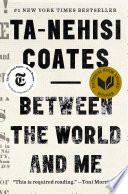
From "Between the World and Me"
🎧 Listen to Summary
Free 10-min PreviewThe Invention of 'Race' and its Violent Consequences
Key Insight
The text asserts that 'race' is not a natural or objective feature of the world but rather a social construct, declaring that 'race is the child of racism, not the father.' Americans implicitly believe in race as an 'indubitable feature,' which then gives rise to racism, described as 'the need to ascribe bone-deep features to people and then humiliate, reduce, and destroy them.' This perspective conveniently absolves humanity by likening racism to natural disasters like earthquakes or tornadoes, suggesting it's beyond human control.
The process of defining 'the people' has historically been about establishing hierarchy, not genealogy or physiognomy. While differences in skin color and hair are ancient, the belief in their preeminence as a basis for societal organization, signifying indelible deeper attributes, is a modern invention. This idea created 'new people' who were 'brought up hopelessly, tragically, deceitfully, to believe that they are white.' These 'new people' were once distinct groups like 'Catholic, Corsican, Welsh, Mennonite, Jewish' before being consolidated under the banner of 'white.'
This elevation to 'whiteness' was not achieved through benign means like 'wine tastings and ice cream socials,' but through brutal acts of 'pillaging of life, liberty, labor, and land; through the flaying of backs; the chaining of limbs; the strangling of dissidents; the destruction of families; the rape of mothers; the sale of children.' These acts were fundamentally designed to deny black people the right to secure and govern their own bodies, establishing a 'machinery of criminal power' that defines the meaning of 'white' as divorced from genuine human identity.
📚 Continue Your Learning Journey — No Payment Required
Access the complete Between the World and Me summary with audio narration, key takeaways, and actionable insights from Ta-Nehisi Coates.