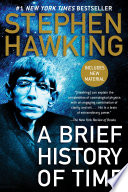
From "A Brief History of Time"
🎧 Listen to Summary
Free 10-min PreviewParadoxes and Chronology Protection in Time Travel
Key Insight
Despite theoretical possibilities for time travel, the absence of visitors from the future raises a fundamental question. Explanations range from secretiveness or the unreliability of alleged UFO sightings, to the idea that the past is fixed due to observation, making time travel confined to the future. This would prevent paradoxes like changing history, such as going back to kill one's great-great-grandfather, a scenario that would lead to logical contradictions. Resolving these paradoxes is crucial for the coherency of time travel theories.
Two main resolutions exist for time travel paradoxes. The 'consistent histories approach' posits that if space-time allows past travel, any events that occur must already be consistent with recorded history. A time traveler, for instance, could not commit acts that contradict their current existence, implying a lack of free will for their actions in the past because those actions are pre-determined parts of an already existing timeline. In contrast, the 'alternative histories hypothesis' suggests that time travelers entering the past simply create and interact with a new, distinct historical timeline, separate from their original one, thereby allowing them to act freely, as depicted in films like 'Back to the Future.' However, Richard Feynman's 'sum over histories' in quantum theory aligns more closely with the consistent histories view, where a single space-time encompasses all events, requiring self-consistency.
Quantum theory does allow for microscopic time travel, as evidenced by particle-antiparticle equivalence (an antiparticle moving from A to B is equivalent to a particle moving backward from B to A) and the mechanism of black hole radiation. This can be conceptualized as virtual particles traveling backward in time out of a black hole, scattering, and then moving forward. While this demonstrates quantum theory permits time travel on a microscopic scale with observable effects, the question remains whether it extends to macroscopic scales for people without historical inconsistencies. The 'chronology protection conjecture' proposes that the laws of physics actively prevent macroscopic bodies from carrying information into the past. This might occur because the extreme space-time warping needed for past travel would cause virtual particles on closed loops to become real, their energy density growing to immense levels, potentially generating positive curvature that prevents further past travel. The exact nature of this curvature remains debated, but this conjecture suggests a natural barrier against paradoxes, making macroscopic time travel highly improbable.
📚 Continue Your Learning Journey — No Payment Required
Access the complete A Brief History of Time summary with audio narration, key takeaways, and actionable insights from Stephen Hawking.