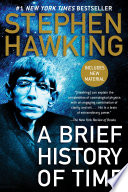
From "A Brief History of Time"
🎧 Listen to Summary
Free 10-min PreviewThe Quest for a Unified Theory of Physics
Key Insight
The ultimate goal in physics is to discover a complete, consistent, unified theory that encompasses all partial theories as approximations, without requiring arbitrary numerical adjustments to fit observed facts. This endeavor is known as 'the unification of physics.' Historically, this quest has been challenging; Einstein, despite his significant contributions to quantum mechanics, spent his later years unsuccessfully searching for such a theory, primarily because knowledge of nuclear forces was limited, and he rejected the reality of quantum mechanics, a principle now considered fundamental. Past instances of overconfidence, such as the early 20th-century belief that continuous matter properties explained everything or Max Born's 1928 assertion that physics would conclude in 'six months,' were definitively overturned by discoveries like atomic structure, the uncertainty principle, the neutron, and nuclear forces.
Current attempts at unification face a crucial hurdle in combining general relativity with quantum mechanics. Existing Grand Unified Theories (GUTs) successfully integrate the weak, strong, and electromagnetic forces but exclude gravity and rely on arbitrary parameters, such as the relative masses of particles. The core difficulty lies in general relativity being a 'classical' theory, meaning it does not incorporate the uncertainty principle, which is fundamental to other partial theories. Merging these theories leads to conceptual paradoxes, for instance, the uncertainty principle implies that 'empty' space is filled with virtual particle-antiparticle pairs possessing infinite energy and, by E=mc², infinite mass, causing infinite gravitational attraction and an infinitely curved universe. While similar infinities in other partial theories can be 'renormalized' (canceled by introducing other infinities), this mathematically dubious technique, though practically effective for predictions, prevents the actual prediction of masses and force strengths from the theory itself.
Further challenges arose in trying to incorporate the uncertainty principle into general relativity, as its two adjustable quantities (gravity strength and cosmological constant) proved insufficient to eliminate all infinities. Detailed calculations in 1972 confirmed these persistent infinities, contradicting finite observed quantities like space-time curvature. A proposed solution in 1976, 'supergravity,' aimed to unify the graviton (spin-2) with other particles (spin 3/2, 1, 1/2, and 0) as different aspects of a 'super-particle,' positing that negative-energy virtual pairs would cancel positive-energy pairs, thus reducing infinities. However, the immense complexity of these calculations and the mismatch between supergravity particles and observed ones limited its acceptance. A remarkable shift occurred in 1984 with the resurgence of 'string theories,' which propose that fundamental objects are not point-like particles but one-dimensional, infinitely thin strings (open or closed loops), with particle interactions corresponding to strings joining or dividing, like an 'H-shaped tube' for gravity.
📚 Continue Your Learning Journey — No Payment Required
Access the complete A Brief History of Time summary with audio narration, key takeaways, and actionable insights from Stephen Hawking.