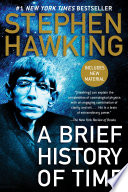
From "A Brief History of Time"
🎧 Listen to Summary
Free 10-min PreviewThe Expanding Universe and its Discovery
Key Insight
Early astronomers, notably Sir William Herschel, established that our solar system resides within a disk-shaped collection of stars, now known as the Milky Way galaxy. By 1924, American astronomer Edwin Hubble fundamentally altered this view, demonstrating that ours was not the sole galaxy, but one of many, separated by vast stretches of empty space. To ascertain the immense distances to these other galaxies, Hubble employed an indirect technique: identifying specific types of stars with known intrinsic luminosity. By measuring their apparent brightness, he could accurately calculate their distances, confirming the existence of a multitude of galaxies beyond our own.
Hubble's subsequent work involved systematically cataloging the distances and spectral properties of these numerous galaxies. Contrary to prevailing expectations that galaxies would exhibit random movements, his observations revealed a consistent phenomenon: most galaxies displayed a 'red-shift' in their light spectra. This red-shift, explained by the Doppler effect, signifies that light waves from receding objects are stretched, shifting towards the red end of the spectrum. Conversely, objects moving towards us would show a 'blue-shift'. This indicated that nearly all observed galaxies were moving away from Earth.
A groundbreaking discovery by Hubble in 1929 further refined this understanding: the magnitude of a galaxy's red-shift, directly proportional to its recession velocity, was found to be directly proportional to its distance from us. This critical finding proved that the universe is not static but dynamically expanding, with the spaces between galaxies continuously growing. This profound realization, which showed our galaxy as one of approximately 100 thousand million galaxies, each containing about 100 thousand million stars, established the foundation for modern cosmology and marked a paradigm shift from previous geocentric and static universe models.
📚 Continue Your Learning Journey — No Payment Required
Access the complete A Brief History of Time summary with audio narration, key takeaways, and actionable insights from Stephen Hawking.