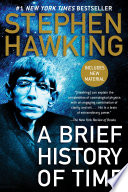
From "A Brief History of Time"
🎧 Listen to Summary
Free 10-min PreviewExplaining the Direction and Coherence of Time's Arrows
Key Insight
The existence and directionality of the thermodynamic 'arrow of time' are explained by the 'no boundary condition' in a quantum theory of gravity, which posits that the universe began as a regular, smooth point in space-time in a highly ordered state. This initial condition implies that any fluctuations in density and velocity were minimal, consistent with the uncertainty principle. This ordered beginning sets the stage for disorder to subsequently increase as the universe evolves, becoming 'lumpy and disordered' over time, thereby providing a well-defined direction for the thermodynamic arrow.
The psychological 'arrow of time', our subjective sense of time's direction and our capacity for memory, is determined by and aligns with the thermodynamic arrow. Analogous to how a computer's memory shifts from a disordered state to an ordered one when recording information, requiring energy that dissipates as heat and increases the overall disorder of the universe, human memory also functions in the direction where entropy increases. This fundamental link means that the direction in which we remember the past is intrinsically tied to the direction in which disorder increases. For example, remembering approximately two million pieces of information increases order in the brain, but this consumes over a thousand calories of ordered energy (food) converted to disordered heat, increasing universal disorder by approximately 20000000000000000000000000 units, about 10000000000000000000 times the increase in order in the brain.
The congruence of the thermodynamic and cosmological arrows, meaning disorder increases as the universe expands, is explained by the weak anthropic principle. Intelligent beings capable of asking such questions can only exist in conditions where a strong thermodynamic arrow is present, which is exclusively during the expanding phase of the universe. In a hypothetical contracting phase, the universe, which will not start to contract for at least another 10000000000 years, would eventually reach a state of almost complete disorder, lacking a strong thermodynamic arrow for intelligent life to operate, as life processes inherently require consuming ordered energy and converting it into disordered energy. Therefore, the 'no boundary condition' ensures disorder increases and intelligent life conditions are met only in the expanding phase, not that expansion directly causes disorder increase.
📚 Continue Your Learning Journey — No Payment Required
Access the complete A Brief History of Time summary with audio narration, key takeaways, and actionable insights from Stephen Hawking.