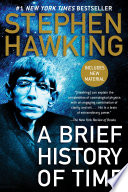
From "A Brief History of Time"
🎧 Listen to Summary
Free 10-min PreviewThe Universe's Nature, Scientific Theories, and the Role of God
Key Insight
Humanity seeks to comprehend the universe's nature, origin, and our place within it by forming 'world pictures.' Early attempts involved spirits unpredictably controlling events, inhabiting natural objects and celestial bodies. However, regularities were observed, such as the sun's consistent rising in the east and setting in the west, irrespective of sacrifices. The sun, moon, and planets followed precise, predictable paths, suggesting even 'gods' adhered to strict, exceptionless laws. This recognition of order evolved, particularly over the last 300 years, leading to the discovery of increasingly numerous laws.
This success led to the early 19th-century postulate of scientific determinism, which posited a set of laws could precisely dictate the universe's evolution from a given configuration. This determinism was incomplete, not specifying how laws were chosen or the universe's initial state, tasks left to a non-intervening God. However, quantum mechanics' uncertainty principle demonstrates that quantities like particle position and velocity cannot be simultaneously predicted with complete accuracy, challenging classical determinism. Quantum theories provide deterministic laws for wave evolution, with unpredictability arising only when interpreting waves as particle properties, suggesting waves might be the fundamental reality. The redefined scientific task involves discovering laws within these uncertainty limits, leaving the 'why' of law and initial state selection unanswered.
Gravity is paramount in shaping the universe's large-scale structure, despite being the weakest of the four fundamental forces. Its attractive nature implies the universe must be expanding or contracting. General relativity suggests an initial state of infinite density, the 'big bang,' marking an effective beginning of time, and potentially a future 'big crunch' or singularities in black holes, representing ends of time. At these singularities, established laws break down. A new possibility, combining quantum mechanics and general relativity, proposes a finite, four-dimensional space without singularities or boundaries, akin to Earth's surface but with additional dimensions. This 'no boundary proposal' could explain the universe's large-scale uniformity, smaller-scale variations like galaxies and stars, and the observed 'arrow of time.' If the universe is entirely self-contained, this implies no freedom for a creator in choosing initial conditions, possibly leaving only one or a few self-consistent unified theories, such as heterotic string theory, that permit the existence of complex beings. The profound question of why the universe exists, beyond just a set of equations, remains a challenge, shifting from purely scientific ('what') to philosophical ('why') inquiry, which, if answered by a complete, universally understandable theory, would represent the ultimate triumph of human reason.
📚 Continue Your Learning Journey — No Payment Required
Access the complete A Brief History of Time summary with audio narration, key takeaways, and actionable insights from Stephen Hawking.