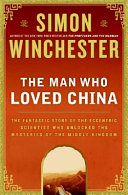
From "The Man Who Loved China"
🎧 Listen to Summary
Free 10-min PreviewWartime Travels and Personal Experiences in China
Key Insight
Marooned deep within China's interior during wartime, a traveler embraced a philosophical view, seeing the enforced delay in the Turkestan desert as an opportunity for reflection and planning. His immediate goal was to explore the Mogao caves nearby, a rare chance he believed would not recur. Later, he embarked on an extensive 'South-Eastern Journey' through war-torn regions, often relying on a converted Chevrolet ambulance that proved to be unreliable, necessitating various repairs and temporary marooning.
This journey was marked by a unique blend of academic pursuit and personal eccentricities amidst the conflict. He observed the extraordinary situation of a functioning British consulate almost surrounded by enemy territory in Fuzhou. His fascination extended to trains, noting details of locomotives at every stop, and to local people, including 'pretty Miao girls' and 'lovely boat-women'. He maintained a relentless schedule of visiting universities, factories, and schools, delivering lectures, and gathering supplies. During his travels, he encountered diverse and often quirky individuals, such as a parasitologist, a Princeton-educated phoneticist captured by bandits for four months, and a young Chinese man who spoke fluent Greek.
Daily life was punctuated by wartime realities, including frequent air raid alarms and the need to seek shelter. Despite these dangers, his personal habits persisted, notably his insistence on eating toast burnt black, believing the charcoal aided his digestion, a preference that caused consternation among local cooks. He also engaged in various cultural activities, attempting to translate Chinese folk songs and even teaching locals songs like the 'Internationale' and the 'Horst Wessel Song'. His adventures included humorous mishaps, such as falling into a road hole up to his neck, and profound moments of appreciating China's natural beauty, which he described as 'surely the loveliest place on earth.'
📚 Continue Your Learning Journey — No Payment Required
Access the complete The Man Who Loved China summary with audio narration, key takeaways, and actionable insights from Simon Winchester.