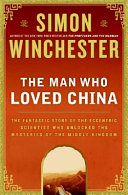
From "The Man Who Loved China"
🎧 Listen to Summary
Free 10-min PreviewLater Life, Project Legacy, and Personal Relationships
Key Insight
Needham served as Master of Caius College for ten years from 1965, during a period of intense global student unrest, including events like the Tet offensive, the Cultural Revolution, and widespread university riots. Despite his prestigious position, he remained a committed socialist, openly supporting student reforms and even delivering a note of solidarity during a sit-in. He also, however, showed traditionalist leanings by restoring college ceremonials and controversially opposing the admission of women and the installation of condom dispensers, arguing against 'instant sex' and preferring students to consider implications by walking to town for supplies.
His relationship with China evolved through later trips. After re-engaging in 1964, where he was warmly greeted by Zhou Enlai, his faith in the regime remained unshaken despite economic privations. However, a 1972 visit to a 'raw and very deeply altered China,' marked by the suffering of the Cultural Revolution and the disappearance of old friends, prompted him to question Mao's policies, eventually labeling them 'disastrous' in a 1978 Nature article after Mao's death. Recognizing the monumental scope of his 'Science and Civilisation in China' project, he began delegating volumes to other scholars (e.g., Francesca Bray, T.H. Tsien), marking a turning point in his approach to sole authorship.
To ensure the project's enduring legacy, Needham and Gwei-djen established a trust, raising funds, notably from David Robinson, which led to the opening of the Needham Research Institute in 1987. His personal life saw significant losses: Dorothy died in 1987 after suffering from Alzheimer's, and Gwei-djen, with whom he shared an 'undying passion' for over half a century, died in 1991 after they finally married in 1989. Despite declining health from scoliosis and Parkinson's disease, Needham's mind remained sharp. He continued working until his death at 94 in 1995, having received the Companionship of Honour in 1992, surrounded by his vast collection of books and artifacts, which inadvertently included items that may have influenced the future 'Unabomber'.
📚 Continue Your Learning Journey — No Payment Required
Access the complete The Man Who Loved China summary with audio narration, key takeaways, and actionable insights from Simon Winchester.