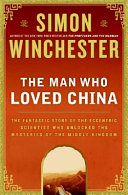
From "The Man Who Loved China"
🎧 Listen to Summary
Free 10-min PreviewAncient Chinese Engineering and Technological Innovation
Key Insight
Chinese mariners were the first to implement the magnetic compass at sea, a transformative development in navigation attested for Chinese ships by AD 1090, a century prior to its Western appearance. While its exact adoption date for maritime use from geomancy is unknown, it likely occurred in the 9th or 10th century. By the late 13th century, compass bearings were recorded in print, with compilations emerging in the following century. The early Chinese maritime compass likely consisted of a magnetized needle floating in water within a small cup, demonstrating a foundational advancement in quantitative navigation.
Ancient China also showcased engineering prowess on a gargantuan scale, exemplified by the Dujiangyan irrigation project on the Min River, created by Li Bing 2300 years ago. This monumental structure in Sichuan, which remains functional today, was built during the Warring States period to control the Min River's destructive floods and provide irrigation for paddy farmers. Li Bing's solution involved cutting a 70-foot-wide spillway through a mountain, a seven-year process utilizing fire and cold water to crack rocks, and an adjustable, fish-shaped diversion dam to regulate water flow. The annual 'breaking of the waters' ceremony still commemorates this engineering feat.
This project stands as one of humanity's most extraordinary achievements, comparable in importance to the Pyramids or Taj Mahal, though created purely for the common good. Its continued operation for over two millennia deeply impressed observers, particularly when contrasted with many Roman aqueducts that now lie in ruins. The remarkable longevity and practical benefit of Dujiangyan highlight China's advanced capabilities in large-scale public works centuries before equivalent Roman accomplishments, challenging notions of Western technological supremacy and underscoring Chinese contributions to human civilization.
📚 Continue Your Learning Journey — No Payment Required
Access the complete The Man Who Loved China summary with audio narration, key takeaways, and actionable insights from Simon Winchester.