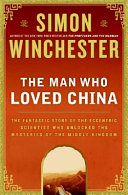
From "The Man Who Loved China"
🎧 Listen to Summary
Free 10-min PreviewThe Genesis of China Project and Wartime Journey to China
Key Insight
In 1937, Needham met Chinese biochemist Lu Gwei-djen, who had traveled to Cambridge specifically to work with him and Dorothy. Gwei-djen was attracted to Needham's scientific prowess, as seen in his three-volume 'Chemical Embryology' (1930), and his prominent left-wing politics. Their encounter ignited a 'magnetic force' and a profound affair, which Dorothy acknowledged with 'complaisance.' More significantly, Gwei-djen's constant insistence on China's overlooked contributions to world science and technology planted the seed for what would become Needham's life's work.
A casual question Needham scribbled on a BBC invitation in 1942, 'Sci. in general in China—why not develop?', evolved into the ambitious idea of a book explaining China's immense scientific contributions. This vision, developed with Gwei-djen, aimed to counter the Western 'arrogant conceit' that minimised China's innovations. Their affair also sparked Needham's sudden, intense immersion in the Chinese language. Gwei-djen became his first teacher, giving him the scholar's Chinese name Li Yue-se and guiding him through self-made dictionaries and grammar books. He obsessively learned 5000-6000 characters, developing eccentric but effective study methods, like organizing radicals by stroke shape, and mastering calligraphy, eventually falling deeply 'in love… with China itself'.
By autumn 1939, driven by this profound connection and the outbreak of war in Europe, Needham decided he had to visit China. This desire coincided with growing awareness in Britain of Japan's brutal assault on China, particularly its education system, with 52 out of 100 colleges destroyed or damaged. In November 1939, Professor Luo Zhongshu appealed to Oxford and Cambridge scholars for help, leading to Needham's selection for a mission to aid Chinese intellectual survival. Despite diplomatic delays, America's entry into WWII after Pearl Harbor in December 1941 cleared the path for official British assistance. Needham was appointed Counsellor and head of the Sino-British Scientific Cooperation Office, finally departing in February 1943, armed with a pistol, for his arduous journey over the 'Hump' to China, marking the distinctive second half of his life.
📚 Continue Your Learning Journey — No Payment Required
Access the complete The Man Who Loved China summary with audio narration, key takeaways, and actionable insights from Simon Winchester.