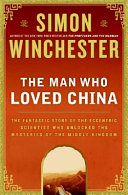
From "The Man Who Loved China"
🎧 Listen to Summary
Free 10-min PreviewJoseph Needham's Upbringing and Early Influences
Key Insight
Joseph Needham's childhood was shaped by his parents' tumultuous Edwardian marriage, a union characterized by his steady doctor father and his erratic, 'artistic temperament' mother, Alicia, who was prone to tantrums, throwing plates, and spending binges. Born in 1900, he was their only child, and even his Christian name was a source of conflict, with his mother choosing Terence and his father Noël; he eventually settled on Joseph for convenience and compromise.
His upbringing was solitary and contemplative, often spent in his fourth-floor room playing with building sets and a model railway, cared for by a humorless French governess. Despite the domestic discord, his intellectually rigorous father provided a solid foundation in both academic and practical worlds. His father taught him to write as an infant, resulting in a lifelong legacy of neat, legible handwriting, and introduced him to woodwork, bird-watching, European geography, and an anti-materialist philosophy.
This stimulating environment fostered a precocious intellect. His reading habits were exceptional, exemplified by his claim to have read Friedrich Schlegel's 'The Philosophy of History' at age ten while learning German. A family friend, Sir John Bland-Sutton, a diminutive, Napoléon-like Cockney anatomist, further nudged Needham toward science with fascinating tales of dissecting 12000 animals, investigating 800 stillborn babies, and developing a diet for pregnant zoo animals.
📚 Continue Your Learning Journey — No Payment Required
Access the complete The Man Who Loved China summary with audio narration, key takeaways, and actionable insights from Simon Winchester.