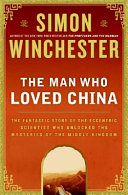
From "The Man Who Loved China"
🎧 Listen to Summary
Free 10-min PreviewAllegations of US Biological Warfare during the Korean War
Key Insight
Allegations of American biological weapons use emerged in 1951 amidst the stalemated Korean War, involving North Korea (supported by China) and South Korea (backed by the United States and United Nations). Initial reports from Moscow claimed US agents poisoned North Korean water wells with cholera, used anthrax to infect cattle, and infiltrated lepers into communist areas to spread disease. These early claims, due to their suspect origin, were largely disregarded by the international community.
In early 1952, more dramatic reports surfaced in the Chinese press, detailing mysterious disease outbreaks in Korea and Manchuria inconsistent with the region or season, such as cholera found in a Korean village in January. Infected insects were reportedly discovered on snow patches, often following US nighttime air raids. A specific incident involved hundreds of vole-like rodents allegedly falling from the skies in a Chinese county near the North Korean border in spring 1952; villagers, having been warned, rapidly organized a collection and destruction campaign, believing these were disease-carrying animals dropped by American planes.
These accusations coincided with China's 'Patriotic Hygiene Campaign,' initiated by Mao Zedong to 'crush the enemy's germ warfare.' Premier Zhou Enlai officially charged the US government with 'the heinous crime of employing bacteriological weapons,' citing outbreaks of plague, respiratory anthrax, and encephalitis, alongside findings of germ-carrying insects and animals scattered in affected areas. Chinese scientists concluded the US was waging a cruel, secret war to shift the strategic balance. This claim gained credibility due to the US's known post-WWII biological weapons development, including data acquired from Japan's notorious Unit 731, and a February 1952 approval by the US Joint Chiefs of Staff to deploy biological weapons 'whenever it is militarily advantageous.'
📚 Continue Your Learning Journey — No Payment Required
Access the complete The Man Who Loved China summary with audio narration, key takeaways, and actionable insights from Simon Winchester.