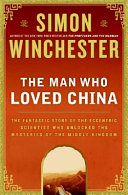
From "The Man Who Loved China"
🎧 Listen to Summary
Free 10-min PreviewWartime Chongqing, Strategic Realities, and Scientific Aid
Key Insight
Chongqing, China's wartime capital, was a city of hills located 1500 miles from the sea at the confluence of the Yangzi and Jialing rivers, settled since the 4th century BC. Despite being an ancient and lively city, it was devastated by two years of continuous Japanese bombing (268 raids between 1939-1941), which gutted much of the central area and killed thousands, with over 4000 fatalities in a single two-day raid. The Chinese exhibited remarkable stoicism during these bombardments, even while witnessing such profound suffering.
The strategic decision by the Nationalist government, led by Chiang Kai-shek, was to leverage China's immense size (4000 miles from Shanghai to Kashgar, 3000 miles from Hainan Island to the Gobi Desert) to wear down the Japanese, who had embarked on an 'unwinnable' war. The sheer scale of China meant an invading army would require uncountable thousands of men just to guard captured sites like bridges and culverts. Holding key provinces like Yunnan, Guizhou, and Sichuan, where Chongqing lies, was deemed sufficient to defeat any enemy.
A critical challenge was the supply of food, weapons, and ammunition, severely hampered by the Japanese occupation of French Indochina, which severed the main railway from Hanoi to Kunming. To counter this, the Allies constructed the legendary Burma and Ledo Roads and established the 'Hump' air bridge. The individual's official mission, through the Sino-British Science Cooperation Office (SBSCO), was to use this air bridge to bring vital laboratory equipment, reference books, and scientific journals to China's beleaguered academic community, ensuring the 'finest brains in the eastern world' were nurtured and informed, with transportation costs covered by the British government.
📚 Continue Your Learning Journey — No Payment Required
Access the complete The Man Who Loved China summary with audio narration, key takeaways, and actionable insights from Simon Winchester.