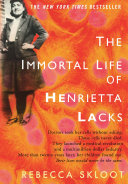
From "The Immortal Life of Henrietta Lacks"
🎧 Listen to Summary
Free 10-min PreviewExpanding Applications and Standardization of Cell Culture with HeLa
Key Insight
Beyond the polio vaccine, HeLa cells enabled a rapid succession of critical scientific advancements. Researchers developed methods to freeze cells without harming them, allowing global shipment via existing frozen food channels and enabling long-term storage between experiments. More significantly, freezing allowed scientists to 'pause' cells at different experimental intervals to study reactions to drugs over time, observe cellular changes with age, and even attempt to identify the exact moment a normal cell transformed into a malignant one.
HeLa was pivotal in standardizing the nascent and disorganized field of tissue culture. Previously, varied media ingredients, recipes, cells, and techniques made it nearly impossible for researchers to replicate experiments, hindering scientific progress. Standardization required three key developments: Tuskegee's mass production of HeLa cells, Harry Eagle's use of HeLa to create the first standardized, ready-to-use culture medium, and Gey's work using HeLa to identify non-toxic glassware and test-tube stoppers. These efforts ensured that, for the first time, scientists worldwide could work with identical cells, grown in the same media, using consistent equipment.
Further advancements included cellular cloning, where scientists isolated individual HeLa cells to create uniform cell lines, harnessing unique traits like growth rates or virus susceptibility. This technology later contributed to isolating stem cells, cloning whole animals, and in vitro fertilization. In human genetics, an accidental discovery with HeLa in 1953 revealed human cells contain 46 chromosomes, not 48, enabling the diagnosis of genetic diseases like Down syndrome (extra chromosome 21), Klinefelter syndrome (extra sex chromosome), and Turner syndrome (missing/partial sex chromosome). The immense demand for HeLa led to the first industrial-scale, for-profit cell distribution center, Microbiological Associates, which evolved into a multi-billion-dollar industry by making HeLa readily available for diverse research into radiation, extreme pressure, drug testing, and various infections worldwide.
📚 Continue Your Learning Journey — No Payment Required
Access the complete The Immortal Life of Henrietta Lacks summary with audio narration, key takeaways, and actionable insights from Rebecca Skloot.