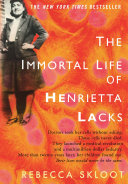
From "The Immortal Life of Henrietta Lacks"
🎧 Listen to Summary
Free 10-min PreviewHeLa Contamination Crisis and the Revelation of Henrietta Lacks' Identity
Key Insight
In 1971, President Richard Nixon initiated the 'War on Cancer,' allocating 1.5 billion dollars for research over three years with the ambitious goal of finding a cure within five years. This created intense pressure on scientists, who focused on discovering an elusive cancer virus. Despite widespread use of cell cultures in this research, many were unknowingly contaminated with HeLa cells. This contamination problem was largely denied by most scientists, some even attempting to disprove Gartler's findings, and it went unreported by the press for a significant period.
The scale of the contamination became undeniable near the end of 1972 when Russian scientists claimed to have found a cancer virus in cells from their patients. The U.S. government sent these samples to the Naval Biomedical Research Laboratory for testing, where Walter Nelson-Rees, a chromosome expert and director of cell culture, identified them as HeLa cells, not Russian patient cells. Nelson-Rees was hired by the National Cancer Institute to address this issue. He gained a reputation as a 'vigilante' by publishing 'HeLa Hit Lists' in 'Science,' publicly naming contaminated cell lines and the researchers who provided them, without prior warning, effectively exposing widespread errors.
Despite Nelson-Rees's efforts, most researchers and the media initially ignored the problem until the news broke that Russian samples were contaminated by American cells. This prompted international headlines reporting 'serious confusion,' 'misguided research,' and millions of wasted dollars. The press then became highly interested in the 'woman behind the cells,' though they used various pseudonyms like Helen Larsen or Helen Lane. Biologist J. Douglas published a letter in 'Nature' in March 1973, questioning the unknown identity of the woman whose cells 'achieved true immortality,' leading to a formal correction from Howard W. Jones. Subsequently, a widely read 'Science' article definitively stated, 'Helen Lane, it seems, never lived. But Henrietta Lacks did,' officially confirming Henrietta Lacks as the source of the HeLa cells and also acknowledging her original cancer misdiagnosis.
📚 Continue Your Learning Journey — No Payment Required
Access the complete The Immortal Life of Henrietta Lacks summary with audio narration, key takeaways, and actionable insights from Rebecca Skloot.