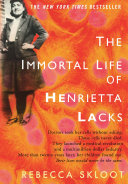
From "The Immortal Life of Henrietta Lacks"
🎧 Listen to Summary
Free 10-min PreviewThe Legacy and Controversy of Alexis Carrel's 'Immortal Chicken Heart'
Key Insight
The public image of cell culture was significantly tarnished by 1951, a legacy traceable to Alexis Carrel and his 'immortal chicken heart,' first grown on January 17, 1912. Carrel, a French surgeon, defied the common scientific belief that tissues could not survive outside the body. At 39, he had already pioneered blood vessel suturing, performed the first coronary bypass, and developed organ transplantation methods, aiming to grow whole organs in a lab. Though his Nobel Prize was for transplantation, the media conflated it with the chicken heart, generating headlines like 'CARREL'S NEW MIRACLE POINTS WAY TO AVERT OLD AGE!' and claiming it suggested 'death perhaps not inevitable,' with scientists hailing it as a century's most important advance and calling Carrel a 'scientific messiah.'
Carrel's controversial personal beliefs and eccentricities further fueled the media frenzy. He was a eugenicist, believing organ transplantation and life extension should preserve the 'superior white race' and advocating for forced sterilization or death for others, even praising Hitler's 'energetic measures.' His laboratory reflected his peculiar beliefs; thinking light killed cell cultures, his technicians worked in black robes and hoods in a completely black room. He held mystical beliefs in telepathy, clairvoyance, and human life for centuries through suspended animation, transforming his apartment into a chapel and later expressing a desire to become a dictator. His best-selling book, 'Man, the Unknown,' which sold over 2 million copies in 20 languages, proposed an 'error' in the U.S. Constitution's promise of equality, stating 'The feeble-minded and the man of genius should not be equal before the law.'
Public obsession with the chicken heart persisted for decades, with annual newspaper reports tracking its supposed survival and Carrel's claims becoming increasingly fantastical, suggesting the cells could 'reach a volume greater than that of the solar system' or 'cover the earth.' This generated fear, inspiring books that predicted 70% of babies would soon be grown in culture and fictional accounts of giant 'Negroes.' A 1930s radio horror show, 'Lights Out,' vividly depicted an immortal chicken heart uncontrollably consuming an entire country. However, years after Carrel's death, scientist Leonard Hayflick discovered the original cells likely died quickly; Carrel had, intentionally or not, continuously added new cells via 'embryo juice.' This suspicion was corroborated by a former lab assistant. The cells were discarded two years after Carrel's death, and by 1951, the public's perception of 'immortal cells' was deeply negative, associating them with racism, science fiction, Nazis, and deceptive claims.
📚 Continue Your Learning Journey — No Payment Required
Access the complete The Immortal Life of Henrietta Lacks summary with audio narration, key takeaways, and actionable insights from Rebecca Skloot.