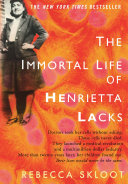
From "The Immortal Life of Henrietta Lacks"
🎧 Listen to Summary
Free 10-min PreviewSomatic Cell Fusion, Hybrid Creation, and Public Reaction
Key Insight
In 1960, French researchers discovered 'somatic cell fusion' or 'cell sex,' where cells infected with certain viruses could clump and fuse, combining their genetic material akin to sperm meeting egg. This process was significant as it allowed researchers to control cell unions and produce offspring every few hours, thereby overcoming the inherent limitations of human genetic studies, where individuals mate freely and take decades to produce meaningful data. Historically, geneticists relied on controlled breeding of plants and animals, but somatic cell fusion provided a direct method to combine cells with desired traits and study their inheritance.
Building on this, in 1965, British scientists Henry Harris and John Watkins created the first human-animal hybrids by fusing HeLa cells with mouse cells, producing cells with DNA from both sources. Harris further demonstrated that HeLa could 'reactivate' deactivated chicken cells, revealing a fundamental mechanism of gene regulation and hinting at potential gene therapies. Subsequent research at New York University found that human-mouse hybrids shed human chromosomes over time, enabling scientists to map human genes to specific chromosomes by observing which genetic traits vanished alongside specific chromosomes. These hybrids were also instrumental in creating the first monoclonal antibodies for cancer therapies like Herceptin, identifying blood groups for safer transfusions, and studying immunity in organ transplantation, proving DNA from different species could coexist.
Despite the scientific breakthroughs, the creation of human-animal hybrids triggered widespread public panic and sensational media coverage in the United States and Britain. Headlines screamed 'MAN-ANIMAL CELLS ARE BRED IN LAB' and 'SCIENTISTS CREATE MONSTERS.' The Times of London called HeLa-mouse cells the 'strangest hybrid form of life,' and a Washington Post editorial deemed the research 'horrendous,' advocating for scientists to 'go back to their yeasts and and fungi.' A BBC documentary appearance by Harris, where he mentioned the possibility of creating a 'mape' (man-ape hybrid), further fueled public alarm. Despite scientists' efforts to clarify they were 'just creating cells' and 'not trying to produce centaurs,' a public survey overwhelmingly condemned the research as 'pointless and dangerous,' exemplifying 'men trying to be gods.'
📚 Continue Your Learning Journey — No Payment Required
Access the complete The Immortal Life of Henrietta Lacks summary with audio narration, key takeaways, and actionable insights from Rebecca Skloot.