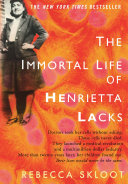
From "The Immortal Life of Henrietta Lacks"
🎧 Listen to Summary
Free 10-min PreviewThe Lacks Family's Understanding and Grievances Regarding Henrietta's Cells
Key Insight
The Lacks family possessed limited factual knowledge about Henrietta's cells, often mixing scientific realities with extraordinary myths. Lawrence, Henrietta's son, believed her cells were 'growing big as the world' and 'fighting off whatever they are fighting off.' He also recounted a circulating myth that by 2050, babies would receive serum from her cells to live for 800 years and eradicate all disease, deeming them a 'miracle.' Sonny, another son, believed her cells were 'blowed up in nuclear bombs' and contributed to 'medical miracles' like polio vaccines, cancer cures, and AIDS treatments, asserting Henrietta would have approved due to her caring nature and 'hospitality.' Neither Lawrence nor Sonny initially understood what a cell was, requiring a basic explanation.
The family expressed profound distress over the lack of informed consent for the use of Henrietta's cells. Day, Henrietta's husband, explicitly stated he only consented to an 'autopsy' ('topsy') to understand her cancer, not to the indefinite culturing or growth of her cells, and was never informed they were already growing. He felt compelled to agree due to the doctors' authority, believing it might help his children. Bobbette, Lawrence's wife, adamantly stated Henrietta 'didn't donate nothing. They took them and didn't ask,' expressing anger that Dr. Gey never informed the family despite knowing how to contact them. The family viewed Henrietta's story as one of exploitation, where her body was used by white scientists without their knowledge or benefit.
Despite Henrietta's cells being 'the most important person in the world' to science, her family faced significant health and economic challenges, lacking consistent health insurance. Day suffered from prostate cancer and asbestos-filled lungs, Sonny had heart issues and needed angioplasty (which he refused), and Deborah contended with arthritis, osteoporosis, nerve deafness, anxiety, and depression. The entire family struggled with high blood pressure and diabetes, yet frequently lacked medical coverage, prompting Lawrence to question, 'If our mother so important to science, why can't we get health insurance?' This financial burden and the history of medical mistreatment led to a deep-seated distrust of the medical system, with Day refusing amputation for his gangrene due to fear of doctors 'cutting on him like they did Henrietta,' and Sonny similarly rejecting angioplasty.
📚 Continue Your Learning Journey — No Payment Required
Access the complete The Immortal Life of Henrietta Lacks summary with audio narration, key takeaways, and actionable insights from Rebecca Skloot.