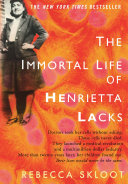
From "The Immortal Life of Henrietta Lacks"
🎧 Listen to Summary
Free 10-min PreviewHistorical Context of Medical Exploitation and Mistrust in the Black Community
Key Insight
Black oral history, dating back to the 1800s, is replete with tales of 'night doctors' kidnapping black individuals for research, fostering deep-seated fear and mistrust in the medical system. These stories were partly propagated by white plantation owners to control slaves, who would disguise themselves as spirits to deter escape or meetings, a tactic that later influenced the Ku Klux Klan's white hooded cloaks. More disturbingly, these fears were rooted in truth: doctors performed medical experiments and surgeries on enslaved people, often without anesthesia. In the early 1900s, medical schools in cities like Washington, D.C., and Baltimore offered money for bodies, leading to the routine exhumation of black corpses and an underground shipping industry that supplied northern schools with black bodies, sometimes transported a dozen at a time in barrels labeled 'turpentine.'
The Johns Hopkins Hospital, often viewed by nearby black residents as an institution built for scientific experimentation on them, was founded with a distinctly philanthropic purpose. Johns Hopkins, an abolitionist who freed his slaves decades before Emancipation, donated $7 million in 1873 to establish a medical school and a charity hospital. His explicit directive was to provide care for 'the indigent sick of this city and its environs, without regard to sex, age, or color,' ensuring free treatment for the poor and using funds from paying patients for charity care. He also allocated an additional $2 million in property and $20000 annually to support 300-400 orphaned or needy 'colored children,' underscoring his intent to serve the black community.
Despite its benevolent founding, Johns Hopkins's history includes documented instances of unethical research involving black patients that fueled community mistrust. In 1969, a Hopkins researcher conducted a study on over 7000 children, mostly from poor black families, to find a genetic link to criminal behavior, without obtaining consent. This led to an ACLU lawsuit, and although initially halted, the study later resumed with consent forms. In the late 1990s, two women sued Hopkins, alleging researchers knowingly exposed their children to lead in a study on lead abatement and failed to promptly inform them of elevated lead levels, even when one child developed lead poisoning. An appeals judge compared this study to the Tuskegee Study and Nazi research, and the case settled out of court, with the Department of Health and Human Services confirming inadequate consent forms. These incidents, alongside the Henrietta Lacks case, cemented a perception of exploitation of black bodies by white scientists at Hopkins.
📚 Continue Your Learning Journey — No Payment Required
Access the complete The Immortal Life of Henrietta Lacks summary with audio narration, key takeaways, and actionable insights from Rebecca Skloot.