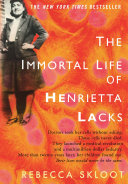
From "The Immortal Life of Henrietta Lacks"
🎧 Listen to Summary
Free 10-min PreviewThe Commercialization of HeLa Cells and the Lacks Family's Struggle for Understanding and Recognition
Key Insight
After reading Rogers's article, Lawrence and Sonny Lacks became convinced that George Gey and Johns Hopkins had stolen their mother's cells and reaped millions from their sale. This belief, born from the revelation that HeLa cells were being widely traded and sold commercially, prompted them to create handouts distributed at Lawrence's store, demanding their 'cut' of the profits. Their actions stemmed from a fundamental misunderstanding of the early commercial landscape of cell lines and the specific role of the researchers and institutions involved.
In reality, George Gey was not motivated by profit; he had declined an offer to run a commercial cell-culture lab in the 1940s and did not patent the roller drum, which could have earned him a fortune. Johns Hopkins has consistently stated they never profited from HeLa, claiming Gey gave them away freely. However, numerous for-profit companies did capitalize on HeLa, with Microbiological Associates (later Invitrogen and BioWhittaker) starting by selling these cells. Today, Invitrogen offers HeLa products ranging from $100 to nearly $10,000 per vial, and the U.S. Patent and Trademark Office database contains over 17,000 patents involving HeLa cells. The American Type Culture Collection (ATCC), a nonprofit, sells HeLa for $256 per vial, though their annual revenue from these sales remains undisclosed.
Deborah Lacks, Henrietta's daughter, focused not on financial gain but on understanding her mother's cells, teaching herself basic biology from textbooks. Her journal entries reveal profound pain, a feeling of her family being 'robbed,' and deep emotional distress over her mother's suffering and the racial segregation she experienced at Johns Hopkins Hospital. Deborah developed terrifying interpretations of HeLa research; for instance, a 'PEOPLE-PLANTS' article led her to believe scientists created a human-plant monster using her mother's cells, and research on AIDS and Ebola made her imagine her mother suffering eternally from those diseases. She was also horrified by a 'psychic healer's' attempt to 'kill' HeLa cells, perceiving it as a violent assault. Deborah's primary plea was for her mother to receive proper credit, expressing frustration that scientists and journalists continued to use the incorrect name 'Helen Lane' rather than acknowledging Henrietta Lacks.
📚 Continue Your Learning Journey — No Payment Required
Access the complete The Immortal Life of Henrietta Lacks summary with audio narration, key takeaways, and actionable insights from Rebecca Skloot.