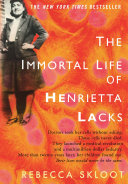
From "The Immortal Life of Henrietta Lacks"
🎧 Listen to Summary
Free 10-min PreviewMiscommunication and Lack of Informed Consent in Genetic Research with the Lacks Family
Key Insight
Following the discovery of Henrietta's living cells, the scientific community, particularly at the June 1973 First International Workshop on Human Gene Mapping at Yale University, sought DNA from the Lacks family. This was primarily to resolve the widespread HeLa cell contamination issue and enable new genetic studies by identifying specific genetic markers. Dr. Victor McKusick, a prominent geneticist at Hopkins who had access to the family's medical records, offered to help. He instructed his postdoctoral fellow, Susan Hsu, to collect blood samples from Henrietta's husband and children, but did not provide specific instructions for explaining the research to the family.
When Susan Hsu, who had a strong accent and was new to America, called Day Lacks, her explanation was interpreted entirely differently by him. Hsu stated she wanted to 'draw blood to get HLA androgen, we do genetic marker profile because we can deduce a lot of Henrietta Lacks genotype from the children and the husband.' However, Day, with only four years of schooling and a thick Southern accent, understood this as a request to 'test my children see if they got that cancer killed their mother,' connecting it to a past promise that Henrietta's autopsy might help his children. Day, accustomed to nodding yes when doctors' explanations were beyond his comprehension, agreed. Hsu believed the family understood and were 'very aware of the value of HeLa cells.'
This profound miscommunication led to the family, including Day's children Lawrence, Sonny, and Deborah, providing blood samples under the mistaken belief they were being tested for cancer. Deborah, particularly terrified of dying young like her mother, repeatedly called Hopkins for 'cancer results,' which did not exist as McKusick's lab was not performing cancer research. McKusick later acknowledged 'no effort to explain anything in great detail,' and Hsu confirmed no consent forms were used, stating, 'We are not doing some kind of medical research, you know, not long term.' This occurred despite NIH guidelines, established in 1966 and expanded in 1971, mandating informed consent and review board approval for federally funded human subject research. These ethical standards were still in flux in 1973, with significant 'widespread confusion about how to assess risk' and 'indifference by those charged with administering research.' Deborah's fears intensified, suspecting she and her siblings were being injected with disease, reflecting the broader anxieties about unethical studies like Tuskegee. She later gave more blood in June 1974, just days before new federal laws requiring informed consent for 'subjects at risk' took effect, still believing it was for cancer testing.
📚 Continue Your Learning Journey — No Payment Required
Access the complete The Immortal Life of Henrietta Lacks summary with audio narration, key takeaways, and actionable insights from Rebecca Skloot.