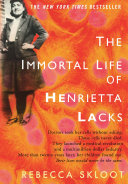
From "The Immortal Life of Henrietta Lacks"
🎧 Listen to Summary
Free 10-min PreviewUnethical Human Experimentation with HeLa Cells
Key Insight
Chester Southam, a virologist at Sloan-Kettering, initiated research in 1954, driven by concerns that rapidly proliferating HeLa cells could infect scientists and to test theories on cancer's viral or immune deficiency origins. He injected approximately 5000000 HeLa cells into the forearms of about a dozen cancer patients, including a woman with leukemia. He told them he was testing their immune systems, but concealed that the injections contained malignant cells. Within five to ten days, hard nodules formed at injection sites, some growing to 2 centimeters, resembling Henrietta's original tumor. While most were removed or vanished, four patients experienced recurrences, and in one, HeLa cells metastasized to her lymph nodes.
In 1956, Southam extended his experiments to healthy individuals, recruiting 96, later 150, volunteers from the Ohio State Penitentiary. He injected 65 prisoners with HeLa cells, leading to tumor growth on their arms. Unlike cancer patients, the prisoners' bodies completely fought off the cancer, responding faster with each subsequent injection, suggesting enhanced immunity. Southam continued injecting HeLa cells into over 600 people, roughly half being cancer patients, and all gynecologic surgery patients at Sloan-Kettering hospitals. He withheld the information that the cells were cancerous, justifying this by citing 'phobia and ignorance' surrounding the word 'cancer' and arguing it was 'medically nonpertinent' to avoid 'unnecessary fear,' which he claimed was 'in the best tradition of responsible clinical practice.'
The ethical controversy escalated in 1963 when Southam arranged for 22 patients at the Jewish Chronic Disease Hospital to be injected. Three Jewish doctors refused to administer the injections without patient consent, citing awareness of Nazi medical experiments and the Nuremberg Trials. Their refusal and subsequent resignation, after a resident proceeded with the injections, sparked media attention and a lawsuit by lawyer William Hyman. Hyman compared Southam's study to Nazi research and presented affidavits from the doctors, who described the research as 'illegal, immoral, and deplorable.' Affidavits also revealed patients' inability to provide informed consent due to conditions like advanced Parkinson's, multiple sclerosis with 'depressive psychosis,' or language barriers, such as speaking only Yiddish. This ultimately led to a New York State Attorney General investigation and a finding of 'fraud or deceit and unprofessional conduct' against Southam by the Medical Grievance Committee, resulting in a one-year probationary period.
📚 Continue Your Learning Journey — No Payment Required
Access the complete The Immortal Life of Henrietta Lacks summary with audio narration, key takeaways, and actionable insights from Rebecca Skloot.