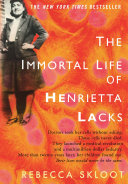
From "The Immortal Life of Henrietta Lacks"
🎧 Listen to Summary
Free 10-min PreviewEmergence of Medical Ethics and Informed Consent in Human Research
Key Insight
The Nuremberg Code, established on August 20, 1947, by a U.S.-led international war tribunal, was a pivotal development in human research ethics, following the sentencing of Nazi doctors for horrific experiments. Its first principle, 'The voluntary consent of the human subject is absolutely essential,' marked a revolutionary shift, as earlier medical guidelines like the Hippocratic Oath did not require patient consent, and no specific rules for human subjects existed before Nuremberg. Despite its significance, the Code functioned as a set of recommendations rather than law and was not routinely taught in American medical schools. Many U.S. researchers, including Southam, either claimed ignorance of its existence or dismissed it as 'the Nazi code,' applicable only to 'barbarians and dictators,' not American physicians.
Before the mid-1960s, formal research oversight was largely absent in the United States. Attempts to establish state and federal laws regulating human experimentation were repeatedly voted down due to fears of impeding scientific progress, even though some European countries, like Prussia, had enacted such regulations as early as 1891. Enforcement of research ethics primarily relied on civil courts, where the Nuremberg Code could be used to establish professional boundaries, but this required significant financial resources, legal knowledge, and the subject's awareness of their participation in research. The term 'informed consent' first appeared in U.S. court documents in 1957, in the Martin Salgo case, where a judge ruled against a doctor for failing to disclose risks, mandating 'full disclosure of facts necessary to an informed consent' from doctors to patients, initially focusing on clinical treatment rather than research subjects.
The ethical controversies surrounding Chester Southam's HeLa cell injections in the early 1960s were a critical catalyst for changes in research oversight. The refusal of three doctors at the Jewish Chronic Disease Hospital to participate without patient consent, combined with a lawsuit by lawyer William Hyman, generated significant media attention and public debate. The New York State Attorney General's subsequent investigation and the Medical Grievance Committee's finding of 'fraud or deceit and unprofessional conduct' against Southam emphatically affirmed that patient consent was not an 'empty formality.' This pressure led the National Institutes of Health (NIH), a major research funder, to investigate its grantee institutions, discovering only 9 out of 52 had policies protecting research subjects. Consequently, the NIH mandated that all human subject research proposals seeking federal funding be approved by independent review boards (IRBs), composed of diverse professionals and laypeople, to ensure ethical compliance and detailed informed consent, fundamentally transforming human experimentation practices and fostering ethical research growth, despite initial fears from some scientists that it would hinder medical progress.
📚 Continue Your Learning Journey — No Payment Required
Access the complete The Immortal Life of Henrietta Lacks summary with audio narration, key takeaways, and actionable insights from Rebecca Skloot.