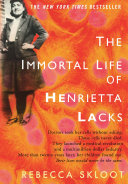
From "The Immortal Life of Henrietta Lacks"
🎧 Listen to Summary
Free 10-min PreviewHenrietta Lacks's Cervical Cancer Diagnosis, Radium Treatment, and Tissue Biopsy
Key Insight
Henrietta Lacks was diagnosed with 'Epidermoid carcinoma of the cervix, Stage I,' a form of cancer originating from epithelial cells covering the cervix. Following her diagnosis, she returned to the hospital on February 6, 1951, signing a general 'OPERATIVE PERMIT' form that authorized 'any operative procedures' deemed necessary for 'surgical care and treatment.' She was admitted to the colored-only ward, where she underwent various tests including urine, blood, and lung checks, with tubes inserted into her bladder and nose. Henrietta did not disclose the seriousness of her condition to her family, reassuring them that nothing serious was wrong and 'Doctor's gonna fix me right up,' maintaining a calm demeanor characteristic of her personality.
Her invasive cervical tumor was treated with radium, a white radioactive metal that glows blue and destroys any cells it encounters. Discovered in the late 1800s, radium was initially hailed as a universal cure, but soon proved capable of causing mutations and cancer at high doses, burning skin, while also effectively killing cancer cells. Hopkins had utilized radium for cervical cancer since the early 1900s, with studies by the 1940s—including one by Henrietta's physician, Howard Jones—demonstrating its superior safety and effectiveness compared to surgery for invasive cases. The treatment involved inserting thin glass tubes of radium, contained within small canvas pouches called Brack plaques, into Henrietta's cervix and sewing them in place, with additional plaques and gauze packed against it to ensure positioning. Doctors regularly exposed to radium in this process, such as the inventor of the Brack plaques and others who transported radium, often died of cancer.
During her first treatment, while Henrietta was unconscious on the operating table, Dr. Lawrence Wharton Jr. collected two dime-sized tissue samples from her cervix: one from her tumor and one from the healthy tissue nearby. This procedure occurred without Henrietta's knowledge or explicit consent for research, as no one had informed her of TeLinde's sample collection efforts or asked if she wished to be a donor. These samples were then immediately transported to George Gey's laboratory. Gey, who had spent three decades striving to grow immortal human cells—a continuously dividing line of cells derived from a single sample that would constantly replenish themselves and never die—was eager to receive any human tissue, calling himself 'the world's most famous vulture' due to his constant feeding on human specimens. Despite Gey's enthusiasm, his lab technicians considered Henrietta's sample merely another tedious specimen, expecting it to die quickly like countless others they had previously attempted to culture.
📚 Continue Your Learning Journey — No Payment Required
Access the complete The Immortal Life of Henrietta Lacks summary with audio narration, key takeaways, and actionable insights from Rebecca Skloot.