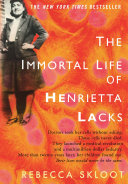
From "The Immortal Life of Henrietta Lacks"
🎧 Listen to Summary
Free 10-min PreviewEfforts to Recognize Henrietta Lacks and Address the Family's Concerns
Key Insight
In 1996, a documentary about Henrietta Lacks began filming, raising Deborah Lacks's hopes for the true story of her mother and the HeLa cells to emerge. Concurrently, Dr. Roland Pattillo organized the first annual HeLa Cancer Control Symposium on October 11, 1996, at Morehouse School of Medicine in Atlanta to honor Henrietta's scientific contributions. The city of Atlanta officially proclaimed October 11 as Henrietta Lacks Day. The Lacks family, including Day, Sonny, Lawrence, Deborah, Bobbette, Zakariyya, and Deborah's grandson Davon, attended the conference, experiencing celebrity-like treatment and the initial hope for recognition, despite personal challenges like Sonny's dangerously high blood pressure and Zakariyya's disruptive behavior. Deborah, nervous but determined, delivered a heartfelt speech, directly addressing her deceased mother.
Inspired by the renewed attention, Courtney Speed and Barbara Wyche, a sociologist at Morgan State University, founded the Henrietta Lacks Health History Museum Foundation, Inc. in Turner Station. They actively sought official recognition from Congress and the mayor's office, which led to a Maryland State Senate resolution congratulating Henrietta and a speech by Representative Robert Ehrlich Jr. in the U.S. House of Representatives on June 4, 1997, advocating for her acknowledgment as the cell donor. During a Smithsonian event, Deborah, still seeking to understand her mother's legacy, even inquired if it was possible to take DNA from HeLa cells and put it into one of her eggs to bring her mother back to life. Their ambitious plans included developing a $7 million museum, organizing events with Henrietta Lacks 'look-alikes', and distributing Henrietta Lacks T-shirts and pens, all aimed at raising awareness.
Barbara Wyche communicated with Johns Hopkins President William Brody, detailing the family's suffering, the ethical questions surrounding the 'mass, and commercial, production, distribution, and marketing' of HeLa cells, and the specific issues pertinent to Henrietta as an African American woman. Hopkins's Assistant to the President, Ross Jones, responded by denying commercial profit from HeLa cells, stating they were shared freely according to 'universally accepted practice' at the time, where permission for tissue use was not sought. At a community event featuring Gey's former assistant, Mary Kubicek, who explained cells were freely given and not patentable, Deborah helped to diffuse audience tension by asking Kubicek to recount seeing her mother's red toenails during the autopsy, a detail that deeply moved the attendees. Although an internal Hopkins group initially considered ways to honor Henrietta, these plans were later abandoned due to a distracting lawsuit, with a Hopkins spokesperson clarifying it was never an official institutional initiative.
📚 Continue Your Learning Journey — No Payment Required
Access the complete The Immortal Life of Henrietta Lacks summary with audio narration, key takeaways, and actionable insights from Rebecca Skloot.