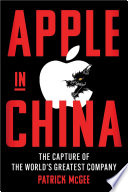
From "Apple in China"
🎧 Listen to Summary
Free 10-min PreviewChina's Emergence as the 'Silicon Valley of Hardware'
Key Insight
China underwent a profound economic transformation starting in the late 1970s under Deng Xiaoping's 'reform and opening up' policies, establishing special economic zones like Shenzhen. Shenzhen, a fishing village of fewer than 70,000 in 1980, rapidly industrialized, growing to over 7 million people by the early 2000s, becoming a global electronics manufacturing hub dubbed the 'Silicon Valley of Hardware.' This growth was driven by the 'Guangdong Model,' an export-focused template supported by local government incentives for foreign investment and facilitated by migrant labor.
Early Chinese suppliers in Shenzhen often exhibited 'horrendous quality by Western standards,' with crudely constructed factories where speed and scale were the sole priorities. However, the influx of Taiwanese entrepreneurs (Taishang) brought critical managerial expertise and capital. This, combined with substantial local government subsidies for land, machinery, and infrastructure, allowed factories like Foxconn to acquire world-class equipment, often at the government's expense, enabling rapid advancements in manufacturing capabilities despite harsh working conditions for employees.
Terry Gou's Foxconn played a pivotal role in this transformation, with its revenue soaring from $1.8 billion in 1999 to $98 billion by 2010, largely due to its partnership with Apple. Apple recognized that China's vast, affordable, and diligent labor force enabled 'unconstrained design,' allowing for intricate and automation-unfriendly products to be manufactured cost-effectively. China's integration into the global economy, particularly through its entry into the World Trade Organization in 2001, coincided with the rise of compact, high-volume consumer electronics like the iPod, firmly establishing China as the world's premier manufacturing powerhouse for hardware.
📚 Continue Your Learning Journey — No Payment Required
Access the complete Apple in China summary with audio narration, key takeaways, and actionable insights from Patrick McGee.