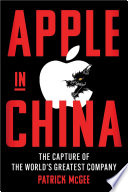
From "Apple in China"
🎧 Listen to Summary
Free 10-min PreviewApple's Unprecedented Supply Chain Model
Key Insight
Apple's rapid ascent to become the world's largest manufacturer without owning any factories marked a significant shift, dubbed the 'Apple Shock.' While China's incentives (subsidized land, cheap labor, bonded zones, artificially low currency) attracted countless companies, Apple developed a unique offshoring model. It married zealous control over manufacturing processes with the cost benefits and flexibility of not owning the factories. This strategy involved embedding its top product and manufacturing design engineers directly into supplier facilities for extended periods, where they 'whipped local suppliers into shape,' co-invented new production processes, and remained until operations were fully functional.
This approach went far beyond conventional outsourcing; Apple effectively created the manufacturing competence in China itself. While rivals simply provided spec sheets, Apple designed custom parts, meticulously crafted their manufacturing processes, and orchestrated complex assembly at an unmatched scale and flexibility, responding to demand with precision. This deep vertical integration, achieved without direct ownership, was reflected in hard metrics like inventory turns, where Apple outperformed competitors like Nokia and Tesco by 2.5 times and Coca-Cola by 12 times, demonstrating its unparalleled efficiency.
Crucially, Apple invested hundreds of millions, eventually billions, of dollars into purchasing machinery, placing it directly in supplier factories, and 'tagging' it for Apple's exclusive use. This equipment, which quadrupled from $245 million in 2001 to $1.1 billion in 2007 and then soared to $16 billion in the subsequent five years, enabled suppliers to operate at a level otherwise impossible. Apple retained the right to reclaim this machinery at any time, using this leverage to control suppliers and even shift production to rivals, as demonstrated when Foxconn attempted to exert leverage. This model, which positioned Apple as the 'arms and legs' of its suppliers and often granted Apple intellectual property rights, fundamentally reshaped the electronics industry, leading to the 'Chinafication' of its supply chain, a dependency that later posed significant challenges due to its concentrated nature.
📚 Continue Your Learning Journey — No Payment Required
Access the complete Apple in China summary with audio narration, key takeaways, and actionable insights from Patrick McGee.