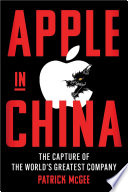
From "Apple in China"
🎧 Listen to Summary
Free 10-min PreviewThe Rise of Electronics Contract Manufacturing and SCI Systems' Role
Key Insight
The personal computer industry experienced a significant shift over fifteen years, moving from companies building their own machines to extensively outsourcing production. This transformation was largely spearheaded by companies like SCI Systems, originally Space Craft Inc, founded in 1961 to support America's space race efforts. Led by co-founder Olin B. King, known as 'the Godfather of Huntsville,' SCI honed its technical expertise building satellites and missile components for the U.S. government and instruments for NASA’s Saturn V rocket.
IBM, facing internal bureaucracy, made a radical decision in 1981 for its first PC: it outsourced nearly all components, including the operating system from a young Microsoft, and relied on SCI's military precision engineering to build circuit boards. SCI pioneered automated assembly methods like surface mount technology, enabling IBM to produce PCs at high volume and low cost, thereby achieving market dominance through production innovation rather than just clever design. SCI later expanded its role beyond circuit boards to include full assembly, distribution, and building entire computers, creating the modern electronics contract manufacturing industry.
Initially, King faced resistance for suggesting companies give up manufacturing, but the economic benefits were deeply alluring. He offered manufacturing as a service, allowing clients to pay only for what they needed, eliminating fixed costs associated with full-time factory workers. This model quickly gained traction, boosting SCI's sales from 45 million dollars in 1981 to 500 million dollars by 1985, with IBM as its largest client. By the mid-1990s, SCI, alongside other contract manufacturers like Solectron and Flextronics, became a Fortune 500 company and the world's largest assembler of electronics with over 30000 employees across seventeen countries, effectively killing off the vertically integrated computer company model and commoditizing the PC market.
📚 Continue Your Learning Journey — No Payment Required
Access the complete Apple in China summary with audio narration, key takeaways, and actionable insights from Patrick McGee.