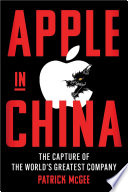
From "Apple in China"
🎧 Listen to Summary
Free 10-min PreviewApple's Decline and the IBM PC's Strategic Misunderstanding
Key Insight
Apple's initial success relied on the open architecture of the Apple II, which, championed by Steve Wozniak, allowed third-party developers to create thousands of applications like VisiCalc and EasyWriter, transforming it into a versatile workhorse and dominating the microcomputing market by 1983. However, Steve Jobs's later resentment of these 'freeloaders' led Apple to increasingly 'fight' third-party development and insist on building its own components, resulting in higher costs and a perception that 'nobody could do anything better than Apple.' This closed approach contrasted sharply with the future industry trend.
The critical turning point in Apple's decline can be traced to Steve Jobs's misunderstanding of the IBM PC in August 1981. While Jobs initially feared IBM would introduce breakthrough technology or an unaffordable machine, IBM instead focused on speed and scale, assembling its PC from existing, commoditized parts and outsourcing its operating system to a then-small startup called Microsoft. Jobs dismissed the IBM PC as 'junk,' confidently taking out newspaper ads proclaiming 'Welcome, IBM. Seriously.'
Jobs's folly became clear as IBM, starting with zero PC revenue in 1980, captured 16 percent of the market by 1982, outselling Apple two to one, and achieved 6 billion dollars in sales by 1984—nearly triple Apple's revenue. IBM's brilliance lay not in technological innovation, but in its open architecture and outsourcing model, which drove down costs, spurred competition, and facilitated a vast ecosystem of third-party software and hardware developers. When Microsoft's Windows 95 caught up with the Macintosh OS, Apple's higher prices and proprietary approach lost their appeal, causing its market share to collapse and leaving it as a 'has-been' company with a dwindling user base, lost innovative edge, and mountains of unsold inventory by 1996.
📚 Continue Your Learning Journey — No Payment Required
Access the complete Apple in China summary with audio narration, key takeaways, and actionable insights from Patrick McGee.