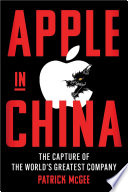
From "Apple in China"
🎧 Listen to Summary
Free 10-min PreviewApple's $275 Billion Investment Pledge
Key Insight
In May 2016, following a 26% decline in China sales and the abrupt shutdown of iTunes and iBooks stores, Apple executives Tim Cook, Jeff Williams, and Lisa Jackson met with China’s economic planning agency at Zhongnanhai, the CCP headquarters. There, they signed an extraordinary, nonbinding Memorandum of Understanding, pledging to invest $275 billion in China over the next five years. This unprecedented sum, reflecting a desperate need for damage control, was intended to reset Apple's narrative and demonstrate its profound commitment to the Chinese market.
The pledge's magnitude was staggering; it surpassed the total Canadian and American private investment into Mexico from 1993 to 2020. It also dwarfed historical nation-building programs like Japan's ¥2.54 trillion (approximately $30 billion in 2016 dollars) loans to China and the 1948 Marshall Plan's $13.3 billion ($131 billion in 2016 dollars) investment in post-WWII Europe. Apple's message was to convey that its success fostered ripple effects across the advanced electronics industry, aligning with Beijing's goals to learn from the West and move up the value chain.
The $275 billion figure was strategically calculated by multiplying Apple’s estimated 2015 investment of $55 billion by five years, a sum encompassing wages for 3 million supply chain workers, billions in machinery placed in supplier factories, and retail store construction. This 'investment,' reclassified through the lens of China's 'registered capital' concept to include training-like wages, aimed to portray Apple not as an exploitative trading company, but as the world's largest corporate investor and a mass enabler of 'indigenous innovation.' What was new was not the investment, but Apple's newfound willingness to market it in 'the local language' to Beijing, fundamentally altering its political standing.
📚 Continue Your Learning Journey — No Payment Required
Access the complete Apple in China summary with audio narration, key takeaways, and actionable insights from Patrick McGee.