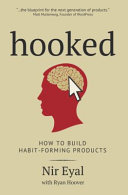
From "Hooked"
🎧 Listen to Summary
Free 10-min PreviewStrategic Development of Habit-Forming Products
Key Insight
To foster habits, a product must engage users within the 'Habit Zone,' characterized by sufficient behavioral frequency and perceived utility. Frequency refers to how often a behavior occurs, while perceived utility measures its usefulness or reward compared to alternatives. Behaviors can become habitual even with minimal perceived benefit if performed frequently enough, or with very high utility even if less frequent. However, infrequent behaviors, regardless of utility, rarely become automatic. The timeline for habit formation is variable, ranging from weeks to over five months, influenced by a behavior's complexity and personal importance, though higher frequency consistently correlates with stronger habit formation.
The 'vitamin or painkiller' framework is crucial for strategic product development. Painkillers address obvious, immediate needs with clear solutions, while vitamins appeal to emotional needs, offering psychological rather than strictly functional benefits. Habit-forming technologies ingeniously embody both; they may initially appear as 'vitamins'—nice-to-have features that solve a subtle 'itch' or discomfort. However, once a user habit is established, these products evolve into 'painkillers,' becoming essential remedies where not performing the action causes a noticeable void or discomfort. This transition highlights how products become indispensable by fulfilling a dependency created through consistent use.
Building habit-forming products inherently involves a degree of manipulation, yet it is critically distinct from fostering addiction. Addictions are compulsive, self-destructive dependencies on behaviors or substances. Conversely, habits can be positive or negative, often supporting daily functioning without inherent harm, like showering or brushing teeth. The challenge for product designers is significant because successfully altering long-term habits is rare, as new behaviors have a 'short half-life' ('last in, first out'), and old neural pathways persist, making reversion common (e.g., 2/3 of alcoholics relapse within a year). Therefore, companies must ensure their products promote healthy habits, alleviating genuine user 'pain' or 'itches,' rather than exploiting vulnerabilities to create harmful dependencies.
📚 Continue Your Learning Journey — No Payment Required
Access the complete Hooked summary with audio narration, key takeaways, and actionable insights from Nir Eyal, Ryan Hoover.