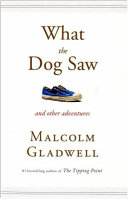
From "What the Dog Saw and Other Adventures"
🎧 Listen to Summary
Free 10-min PreviewCesar Millan's Dog Training Philosophy and Methods
Key Insight
Cesar Millan approaches dog rehabilitation by intentionally avoiding pre-existing knowledge of a case, preventing bias towards the aggrieved party. His core philosophy, 'exercise, discipline, and affection', emphasizes that love alone, without clear rules and boundaries, creates imbalanced dogs. For instance, Sugar, described as '90 percent bad, 10 percent the love', exhibited destructive behaviors like tearing clothes and biting due to her owner's lack of discipline and misunderstanding of canine communication, such as licking being a pack-healing action rather than an apology.
At the Dog Psychology Center, Millan, who learned his methods on his grandfather's farm in Mexico, integrates problem dogs into a pack for a minimum of two weeks. His regimen includes daily 4-hour walks, where larger dogs carry smaller, tired ones, reinforcing a clear hierarchy and the principle of 'Exercise, then food. Work, then reward.' This structured environment consistently transforms highly aggressive dogs—including those that have attacked humans or killed other animals—into calm, submissive individuals, all achieving a 'same state of mind' within the pack.
Millan demonstrates his leadership and 'presence' through precise, authoritative actions. During high-energy play with 47 dogs, he can instantly transition them from a 'yelping, howling, leaping, charging frenzy' to 'absolute quiet' with a short, authoritative whistle. This ability to demand, rather than ask, for a cessation of activity underscores his belief in clear, unambiguous communication and firm leadership. This disciplined approach is crucial for establishing and maintaining a peaceful, regulated dynamic, which he then transfers to guide owners in their relationships with their dogs.
📚 Continue Your Learning Journey — No Payment Required
Access the complete What the Dog Saw and Other Adventures summary with audio narration, key takeaways, and actionable insights from Malcolm Gladwell.