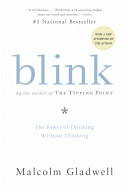
From "Blink"
🎧 Listen to Summary
Free 10-min PreviewThe Subtlety and Strength of Priming Effects on Behavior
Key Insight
Priming demonstrates how subtle, unconscious cues can profoundly influence behavior without conscious awareness. Psychologist John Bargh's experiments showed that participants completing scrambled-sentence tests containing words related to 'old age,' like 'worried' or 'wrinkle,' subsequently walked more slowly down a hallway. In another study, students primed with 'rude' words interrupted a conversation after about five minutes, whereas 82 percent of those primed with 'polite' words never interrupted at all, even after ten minutes, showcasing the significant impact of these unconscious influences.
The effects of priming are substantial, not trivial. In a Trivial Pursuit experiment, students asked to think about a 'professor' beforehand answered 55.6% of questions correctly, compared to 42.6% for those who thought about 'soccer hooligans.' This 13 percentage point difference can be critical for success. Moreover, in an even more extreme example, black college students, simply by indicating their race before a standardized test, experienced a halving of their correct answers due to the priming of negative stereotypes associated with academic achievement.
Crucially, individuals subjected to priming are entirely unaware of its influence on their actions. Participants in these experiments could not attribute their changed behavior—like walking slowly or exhibiting more cooperation—to the priming cues, offering 'random, noise' as explanations when pressed. This unconscious processing, described as a 'mental valet,' handles minor mental details and ensures appropriate behavior in specific contexts, freeing the conscious mind to focus on primary tasks. This hidden work highlights that much of our 'free will' can be an illusion, as our actions are highly susceptible to external, unconscious influences.
📚 Continue Your Learning Journey — No Payment Required
Access the complete Blink summary with audio narration, key takeaways, and actionable insights from Malcolm Gladwell.