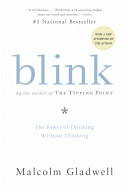
From "Blink"
🎧 Listen to Summary
Free 10-min PreviewThe 'Storytelling Problem' and the Limits of Conscious Explanation
Key Insight
Humans possess a 'storytelling problem,' an inherent tendency to quickly generate plausible but often inaccurate explanations for actions rooted in unconscious processes. In speed-dating, individuals make rapid attraction decisions based on 'thin slices' like a 'pierced tongue' or an 'accent,' yet their conscious, stated preferences for a partner frequently do not align with whom they are actually attracted to. While conscious ideals may shift immediately after an experience, they often revert to original beliefs after a month, revealing a disconnect between stated desires and actual, immediate preferences.
This disconnect extends to expert performance. Top tennis players, like Andre Agassi, consciously believe they 'roll their wrist over the ball' during a forehand, but digitized analysis shows the wrist remains fixed until 'long after the ball is hit,' leading to ineffective coaching and injuries. Legendary baseball hitter Ted Williams was confident he could 'look the ball onto the bat,' but research confirms the ball moves too quickly (a 3-millisecond event) for human eyes to track in its final five feet, a fact Williams honestly acknowledged. Similarly, in Maier's two-ropes experiment, subjects could not solve the problem until a subtle, unconscious hint was provided.
When asked to explain their solutions to the rope problem, subjects fabricated logical reasons ('It just dawned on me'), entirely unaware of the unconscious prompt. This illustrates that people are often ignorant of the true influences on their actions but rarely perceive themselves as such. Demanding explanations for these unconsciously driven decisions, such as a juror's assertion that race 'had absolutely nothing to do' with a verdict, can lead to serious consequences. Accepting this 'storytelling problem' and embracing the phrase 'I don't know' more often is crucial, as it respects the profound, often silent, and effective work of the unconscious mind.
📚 Continue Your Learning Journey — No Payment Required
Access the complete Blink summary with audio narration, key takeaways, and actionable insights from Malcolm Gladwell.