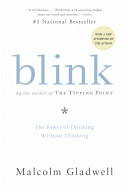
From "Blink"
🎧 Listen to Summary
Free 10-min PreviewThe Power and Nature of Rapid Cognition
Key Insight
The J. Paul Getty Museum's acquisition of a kouros statue, a sculpture of a nude male youth from the sixth century BC, demonstrated a profound contrast between deliberate analysis and intuitive judgment. After a 14-month investigation, including geological analysis confirming the ancient dolomite marble from Thasos and a calcite layer indicative of centuries of aging, the museum purchased the nearly seven-foot-tall, well-preserved statue for just under $10 million. However, several art experts, including Federico Zeri, Evelyn Harrison, Thomas Hoving, Georgios Dontas, and Angelos Delivorrias, immediately experienced an 'intuitive repulsion' or a sense that something was 'wrong' or 'fresh' upon first sight in December of 1983, long before any conscious understanding of why.
This phenomenon is further illustrated by the Iowa card game experiment, where participants chose cards from four decks to maximize winnings. Two red decks yielded high rewards but also significant penalties, while two blue decks offered consistent $50 payouts and modest penalties. Participants consciously understood the game's mechanics and favored the blue decks after about 80 cards. Crucially, stress responses, measured by sweat gland activity in their palms, indicated an unconscious awareness of the red decks' danger after just 10 cards, 40 cards before conscious realization. This demonstrated that behavior shifted towards the advantageous blue decks long before any explicit understanding.
These observations highlight the brain's use of a 'second strategy': the adaptive unconscious. Unlike the slow, conscious, and logical decision-making process, this system functions like a powerful internal computer, making quick judgments based on minimal information, which is vital for survival. For example, studies showed that student ratings of a teacher's effectiveness, based on silent two-second video clips, were nearly identical to evaluations made after an entire semester of classes. The adaptive unconscious efficiently processes complex situations and influences actions through indirect channels, such as physiological responses or sudden thoughts, often operating entirely below the surface of conscious awareness.
📚 Continue Your Learning Journey — No Payment Required
Access the complete Blink summary with audio narration, key takeaways, and actionable insights from Malcolm Gladwell.