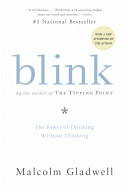
From "Blink"
🎧 Listen to Summary
Free 10-min PreviewTraining and Experience in Overcoming Mind-Blindness and Improving Rapid Judgments
Key Insight
Mind-blindness and compromised rapid decision-making under stress are not inevitable and can be mitigated through rigorous training and experience. 'Stress inoculation' programs, such as simulated shooting scenarios or confronting ferocious dogs, are designed to habituate individuals to high-stress environments. Participants' heart rates, initially soaring to 175 BPM, can be reduced to 110-120 BPM through repeated exposure, allowing them to function effectively under pressure.
Mind-reading itself is an improvable skill. People who practice, such as stroke victims who have lost speech or individuals from abusive childhoods, often become virtuosos at interpreting facial cues due to necessity. Training tapes can enable individuals to identify microexpressions within 35 minutes, demonstrating that this is an accessible skill that can be refined through conscious effort and practice, as taught in seminars for law-enforcement agencies.
Effective police training emphasizes creating 'white space' and slowing down critical incidents, rather than relying on pure reflexes. Procedures like specific traffic stop positions (parking behind a car, shining lights on a driver's lap) are designed to minimize risks by making it nearly impossible for a suspect to draw a weapon without an unambiguous sequence of actions. A study in Dade County showed that improving officers' conduct *before* encountering a suspect drastically reduced complaints and injuries, highlighting that deliberate strategy, intelligence, and cover are superior to instinctive reactions in preventing unnecessary harm.
📚 Continue Your Learning Journey — No Payment Required
Access the complete Blink summary with audio narration, key takeaways, and actionable insights from Malcolm Gladwell.