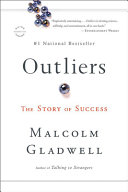
From "Outliers the Story of Success"
🎧 Listen to Summary
Free 10-min PreviewKIPP Academy's Educational Model and Outcomes
Key Insight
The KIPP Academy, an experimental public school, opened in the mid-1990s on the fourth floor of Lou Gehrig Junior High School in New York City's South Bronx, one of the poorest neighborhoods. Students are chosen by lottery, with no entrance exams, and comprise roughly half African American and half Hispanic students. Three-quarters of the children come from single-parent homes, and 90 percent qualify for 'free or reduced lunch,' indicating their families' low income levels. Despite these challenging demographics, KIPP is distinct; students walk quietly, are taught the 'SSLANT' protocol (smile, sit up, listen, ask questions, nod, track), and hundreds of college pennants adorn the hallways, symbolizing the graduates' future.
KIPP is renowned for its mathematics achievements. In the South Bronx, only about 16 percent of middle school students perform at or above grade level in math. At KIPP, by the end of fifth grade, math becomes a favorite subject for many students, and by the end of eighth grade, 84 percent perform at or above their grade level. This outcome means these lower-income children from difficult backgrounds, whose parents often lack college experience, achieve math proficiency comparable to privileged eighth graders in wealthy American suburbs. The school's success, now with over 50 KIPP schools nationwide, is attributed not to curriculum or resources, but to seriously embracing the idea of cultural legacies.
KIPP implements an extended learning schedule, with students starting school at 7:25 AM and staying until 5 PM, with optional homework clubs and sports until 7 PM. Saturdays also include classes from 9 AM to 1 PM, and three additional weeks of school are held in July. This results in 50 to 60 percent more learning time than traditional public schools. This extended time allows for a 'relaxed atmosphere' in classrooms, especially in math, where a slower pace avoids the 'sink-or-swim' approach. Teachers can explain concepts thoroughly, students have more time to digest material, and the emphasis is on making mathematics meaningful by demonstrating the clear relationship between effort and reward, leading to greater retention and understanding.
📚 Continue Your Learning Journey — No Payment Required
Access the complete Outliers the Story of Success summary with audio narration, key takeaways, and actionable insights from Malcolm Gladwell.