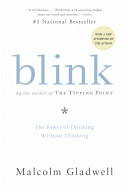
From "Blink"
🎧 Listen to Summary
Free 10-min PreviewConsumer Resistance to Novelty: The Aeron Chair Phenomenon
Key Insight
The Aeron chair, designed by Don Chadwick and Bill Stumpf for Herman Miller, was a radical departure from conventional office furniture, aiming for maximum ergonomic correctness rather than traditional aesthetics. Its innovative features included an independent seat pan and back mechanism for natural pivoting, adjustable arms attached to the back for shoulder support (with a wider top), and a breathable, thin elastic mesh instead of typical foam and fabric. This design resulted in a slender, transparent appearance resembling a 'giant prehistoric insect exoskeleton,' directly contradicting consumer preferences for 'thronelike,' heavily cushioned, and 'soft' office chairs.
Initial consumer testing in 1992 revealed significant resistance. Early prototypes of the Aeron scored only 4.75 on a 1-10 comfort scale (7.5 was desired for market launch), and aesthetic scores started between 2 and 3, never exceeding 6 in any prototype. Consumers found the wiry frame and mesh visually unsettling, questioning its comfort and durability, likening it to 'lawn furniture' or something from 'RoboCop.' Despite facility managers and ergonomic experts' chilly reception and suggestions to cover the chair in fabric, Herman Miller decided to trust their vision and launched the chair as designed, committed to its revolutionary concept.
Initially, sales were slow, but the Aeron chair gradually gained traction among cutting-edge design communities, advertisers, and Silicon Valley. It became a 'cult object' and started appearing in films and television, building its profile. By the late 1990s, annual sales grew by 50 to 70%, making it the best-selling chair in Herman Miller's history, widely imitated. Its aesthetic scores eventually rose to an 8, proving that what was initially perceived as 'ugly' had become 'beautiful.' This phenomenon, mirrored by groundbreaking but initially low-scoring TV shows like 'All in the Family' and 'The Mary Tyler Moore Show,' demonstrates that market research often fails to distinguish between truly bad products and those that are merely 'new,' 'different,' or 'shocking,' requiring time for consumer acceptance.
📚 Continue Your Learning Journey — No Payment Required
Access the complete Blink summary with audio narration, key takeaways, and actionable insights from Malcolm Gladwell.