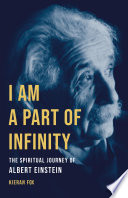
From "I Am a Part of Infinity"
🎧 Listen to Summary
Free 10-min PreviewThe Power of the Human Mind and the Importance of Curiosity
Key Insight
Beyond the external world, the most astonishing aspect for Einstein was the power of our own minds, finding deep mystery in their efficacy to create functional representations of reality. He insisted that 'the most incomprehensible thing about the universe is that it is comprehensible,' marveling at our ability to fashion mental models that help us 'orient ourselves in the labyrinth of sense impressions.' While acknowledging these models are 'a free creation of the human mind' and our experience could be 'an illusion or hallucination' (akin to 'maya' or 'mere phenomenon'), he was astonished by our capacity to look beyond these constructs and peer into the core of existence.
His realization of the mind's extraordinary efficacy began at age 12, when a geometry textbook revealed assertions 'which, though by no means evident, could nevertheless be proved with such certainty that any doubt appeared to be out of the question.' This lucidity made an 'indescribable impression,' demonstrating 'how powerful an instrument the human mind could be' and sparking a 'wonder of a totally different nature.' He felt it 'marvelous' that humans could achieve such certainty in pure thinking, suggesting the mind could move beyond 'maya.' His 'mystical drive' and 'rapturous amazement' for the world were akin to 'religious geniuses,' but he rejected revelation, defining his religion as using 'thinking faculties… to know what seems unknowable.'
Curiosity, termed 'holy curiosity,' was considered the 'sine qua non of the sincere spiritual seeker,' contrasting sharply with traditional religions that often suppressed freethinking. He cited the Judeo-Christian tradition where Adam and Eve's 'original sin' was curiosity, leading to their banishment from Eden after eating from the Tree of Knowledge. Similarly, Buddhism discouraged 'idle curiosity,' prioritizing suffering alleviation over metaphysical inquiry. Einstein, however, believed curiosity to be an admirable, intrinsic impulse toward understanding, a 'mystical drive in man to learn about his own existence,' arguing that 'the struggle to understand while performing creative and open-minded intellectual work' ennobles humans, making deep questioning a sacred duty.
📚 Continue Your Learning Journey — No Payment Required
Access the complete I Am a Part of Infinity summary with audio narration, key takeaways, and actionable insights from Kieran Fox.