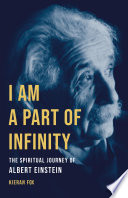
From "I Am a Part of Infinity"
🎧 Listen to Summary
Free 10-min PreviewReconciling Spirituality, Atheism, and the Search for Meaning
Key Insight
The concept of cosmic religion frequently faced accusations of being equivalent to atheism, largely due to its explicit rejection of traditional dogma, a personal God, and its reliance on reason over divine revelation. Many observers, including prominent skeptics, characterized this viewpoint as 'sexed-up atheism,' given the absence of prayer, sin, a savior, Heaven or Hell, and divine rewards or punishments. This perception was reinforced by the individual's deliberate non-affiliation with religious denominations in significant personal and professional contexts, such as listing his religious affiliation as 'None' for a professorship in 1910 and 'dissenter' for his divorce in 1918.
Despite these persistent associations, the individual explicitly stated, 'I am not an atheist,' and expressed anger when quoted to support atheistic views, considering 'mere unbelief in a personal God' as 'no philosophy at all.' While acknowledging that, from a 'standard believer's' perspective, he might be an atheist, he critically distinguished his position from 'fanatical atheists.' He criticized them for an intolerance mirroring religious fanaticism, viewing their stance as primarily 'nourished exclusively by an opposition against naïve superstition,' lacking 'consciousness and humility' regarding the universe's profound harmony, and failing to perceive 'the Wonder of nature.'
This nuanced stance meant that while fundamentally rejecting traditional monotheism, he considered 'a belief in a personal God seems to me still better than the lack of any kind of transcendental interpretation of life.' He recognized the 'simplicity' and accessibility of a personal God for 'undeveloped minds,' lamenting that eliminating 'sacred traditions' could lead to 'spiritual and moral impoverishment.' Ultimately, his primary concern was not unbelief in God, but the absence of any 'big-picture perspective' or nihilism. He believed a life without 'a sense of wonder and purpose' was 'hardly fit for life,' positioning cosmic religion as a pathway to a 'genuine sense of awe' that transcended the limitations of both complacent belief and fanatical atheism.
📚 Continue Your Learning Journey — No Payment Required
Access the complete I Am a Part of Infinity summary with audio narration, key takeaways, and actionable insights from Kieran Fox.