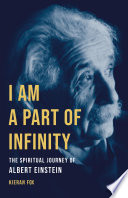
From "I Am a Part of Infinity"
🎧 Listen to Summary
Free 10-min PreviewEastern Philosophy's Influence on Modern Scientific and Spiritual Thought
Key Insight
The turn of the twentieth century, marked by the quantum physics revolution, coincided with a profound influx of Eastern spiritual wisdom into the Western world. Historically separated, Europe and Asia experienced 'continuous contact' from the seventeenth century onwards, leading to a 'torrent' of ancient texts like the Upanishads, Tao Te Ching, Buddhist sutras, and the Bhagavad Gita becoming widely available. This intellectual exchange significantly shaped Western thinkers, most notably Arthur Schopenhauer, who hailed access to the Upanishads and Vedas as 'the greatest advantage' of his century, integrating hundreds of references into his philosophy and predicting its revolutionary impact on European thought.
This deep influence extended to the architects of quantum mechanics, who sought a new synthesis of science and spirituality. Prominent figures such as Werner Heisenberg, Wolfgang Pauli (who cited Lao-tse and Schopenhauer as spiritual influences), Niels Bohr (whose family crest bore the Taoist yin-yang symbol), Robert Oppenheimer (who learned Sanskrit to read the Bhagavad Gita), and Erwin Schrödinger openly acknowledged their fascination and inspiration from Eastern traditions. They perceived these philosophies as anticipating their own scientific insights and spiritual intuitions, making such engagement a pervasive inclination among physicists of that era.
A prominent individual embracing this confluence undertook a six-month journey to Asia in 1922 after winning the Nobel Prize, visiting Buddhist temples in Sri Lanka, China, and Malaysia, as well as Shinto shrines in Japan. He later packed his personal library with Eastern spiritual texts, engaged with monks, and read Taoist and Buddhist scriptures. He admired Mahatma Gandhi and the Indian ideal of nonviolence ('ahimsa'), and the Upanishads' axiom 'Tat tvam asi' (consciousness and cosmos are one), explicitly stating that 'Buddhism contains a much stronger element' of cosmic religious feeling than traditional Western faiths. While not converting or adopting specific practices, his cosmic religion shared a 'family resemblance' with Eastern systems, valuing their emphasis on the 'nonduality of Nature,' 'all-inclusive ethics,' and 'expansion of consciousness,' particularly for their lack of 'blind faith, an anthropomorphic God, and a historical hatred of science.'
📚 Continue Your Learning Journey — No Payment Required
Access the complete I Am a Part of Infinity summary with audio narration, key takeaways, and actionable insights from Kieran Fox.