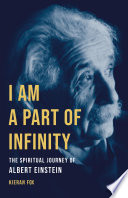
From "I Am a Part of Infinity"
🎧 Listen to Summary
Free 10-min PreviewAlbert Einstein's Adherence to Spinozist Pantheism
Key Insight
Albert Einstein deeply admired and embraced Spinoza's pantheistic vision, declaring, 'The God Spinoza revered is my God, too: I meet Him every day in the harmonious laws which govern the universe.' He found in Spinoza an 'almost perfect prototype for his cosmic religion,' commending his philosophical approach and intellect. Einstein identified Spinoza as 'the ideal example of the cosmic man,' finding a message and method that resonated with his own spiritual convictions.
Einstein openly professed his belief in Spinoza's God, particularly after achieving global fame in 1919. Responding to an inquiry about his belief in God in 1929, he affirmed, 'I believe in Spinoza’s God, who reveals himself in the lawful harmony of the world, not in a God who concerns himself with the fate and the doings of mankind.' He expressed deep fascination with Spinoza's pantheism and ardently wished for Spinoza's seminal work, the Ethics, to reach and influence a broader human audience, convinced of the compatibility between genuine science and true spirituality.
Einstein's 'cosmic religion' represented a departure from traditional monotheistic beliefs, particularly rejecting the concept of a personal God. He asserted that 'human fantasy' conceived gods 'in man’s own image' and identified the 'main source of the present-day conflicts between the spheres of religion and of science lies in the concept of a personal God.' He cited Spinoza and Buddha as examples of 'religiously enlightened' individuals who moved beyond a personal God, fostering an 'unbounded admiration for the structure of the world so far as science can reveal it.' For Einstein, the divine manifested as the physical world, an 'eternal energy' or 'substance of the universe,' which he considered sacred, characterizing his own outlook as 'pantheistic.'
📚 Continue Your Learning Journey — No Payment Required
Access the complete I Am a Part of Infinity summary with audio narration, key takeaways, and actionable insights from Kieran Fox.