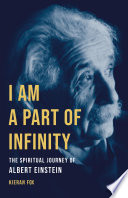
From "I Am a Part of Infinity"
🎧 Listen to Summary
Free 10-min PreviewMisunderstandings and the Authentic Path to Einstein's Spiritual Philosophy
Key Insight
Einstein's 'cosmic religion' has been widely misunderstood since its formulation, largely because scholars attempted to 'assimilate' his radical ideas into existing cognitive frameworks rather than 'accommodate' them. Instead of expanding their understanding, many tried to force his spirituality into familiar categories. For instance, some mistakenly labeled him an atheist, a Deist who believed in a non-intervening Creator God, a realist seeing 'God' as simply the recognition of ultimate reality, or an agnostic. This 'maddening tendency to be purposefully gnomic or oblique' was often blamed on Einstein himself, with a baffled cardinal even doubting if Einstein 'really knows what he is driving at.'
The text criticizes existing studies for being shallow or distorting Einstein's views, citing attempts by theologians to equate him with Christian figures like Jesus or Thomas Aquinas, despite Einstein's insistence that his 'theory of relativity has nothing to do with theology.' Max Jammer's 'Einstein and Religion,' while collecting sources, is highlighted for distorting influences and making 'bogus claim[s],' such as neglecting pantheism, pacifism, and Pythagoreanism—identified as the 'triple keys' to Einstein's spirituality—and falsely stating he had no interest in Eastern philosophy. To truly grasp his spirituality requires 'accommodation,' which involves revising old mental schemas, expanding emotional range, and being open to new inner experiences.
Einstein's spiritual philosophy, formulated at 50 years old, was not the 'idealistic outburst of an innocent youth' but the concentrated wisdom of a life marked by significant suffering, including the death of his infant daughter, his son's schizophrenia, the loss of cousins in the Holocaust, and enduring antisemitism. He intentionally exposed himself to diverse ideas and cultures, visiting many countries and cultivating relationships with figures like Bertrand Russell, Carl Jung, Sigmund Freud, Mahatma Gandhi, and Rabindranath Tagore. His personal library of 2400 books, predominantly philosophy, literature, and religion (including Kant and Cervantes), further demonstrates his deep engagement with complex thought. Despite personal flaws, such as being a 'mediocre husband' and 'subpar father,' he serves as an exemplar, showing that an imperfect human can still elevate others through noble ideals, as he advised younger generations to 'develop an instinct for what one can just barely achieve through one’s greatest efforts.'
📚 Continue Your Learning Journey — No Payment Required
Access the complete I Am a Part of Infinity summary with audio narration, key takeaways, and actionable insights from Kieran Fox.