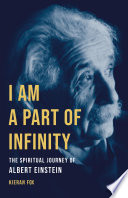
From "I Am a Part of Infinity"
🎧 Listen to Summary
Free 10-min PreviewEinstein's Vision for Unity: Physics, Humanity, and Cosmic Religion
Key Insight
Albert Einstein, a genius who passed away on April 18, 1955, viewed his life's work as unfinished, particularly his decades-long quest to unify all of physics. He considered this search for unity his 'highest and most sacred duty.' Beyond scientific unification, he harbored an equally ambitious wish for a peaceful global civilization, actively promoting this ideal until his final days; for example, he signed a peace manifesto four days before his death and drafted a speech calling for 'universal ideals of peace' found by his bedside. For Einstein, unifying physics and uniting humanity were not disparate goals but rather 'two different aspects of a single spiritual quest.'
He conceptualized this integrated perspective as 'cosmic religion,' an almost unknown concept in his time. He believed his age was 'barbarous, materialistic, and superficial' and hoped for a renaissance in the religious realm, seeing cosmic religion as the means to satisfy humanity's 'hungry for spiritual nourishment.' His vision was a spirituality free from superstition and the supernatural, allowing individuals to experience the sacred without compromising reason or integrity. This true religion, he argued, required not merely new beliefs but 'a new type of thinking' to elevate the human mind to 'higher levels,' allowing one to confidently perceive themselves as 'a part of Infinity.'
Einstein described the perceived fragmentation of physical laws and human separateness as an 'optical delusion' of our limited minds, with the striving to overcome this delusion being 'the one issue of true religion.' He believed experiencing oneself as 'an element of the eternal' was the birthright of every human. Despite its radical nature, dismissing existing religions as 'beyond redemption,' his 'cosmic religion' was profoundly inclusive, recognizing figures from Catholic saints like Francis of Assisi to Eastern sages like Gautama Buddha as enlightened exemplars. It aimed to be an 'alchemical amalgam of mind and matter' and a 'novel synthesis of noble spirituality and exquisite science,' leading to a nondualistic understanding that all things originate from a 'single sacred source.'
📚 Continue Your Learning Journey — No Payment Required
Access the complete I Am a Part of Infinity summary with audio narration, key takeaways, and actionable insights from Kieran Fox.