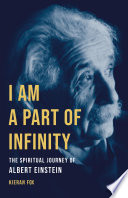
From "I Am a Part of Infinity"
🎧 Listen to Summary
Free 10-min PreviewHuman-Centered Ethics and Moral Responsibility
Key Insight
Ethics was insisted to be 'an exclusively human concern with no superhuman authority behind it,' directly challenging traditional religious views that posited God-given moral laws as eternal truths. While acknowledging the necessity of concepts like good and evil to order existence, it was believed their 'human origin' is often forgotten, leading to their mistaken acceptance as 'indestructible truth.' It was stressed that 'the existence and validity of human rights is not written in the stars,' but rather conceived and taught by 'enlightened men' throughout history, making blind obedience to inherited ethical axioms 'incompatible with the integrity of a modern cultured person.'
A new, secular ethical system was advocated, where ethical behavior should be 'based effectively on sympathy, education, and social relationships,' asserting 'no religious basis is necessary.' A call was made for 'new moral impulses,' potentially from scientists, to deliberately nurture the moral sense outside the religious sphere. The goal was a 'universal moral attitude' that could unite humankind through simple, secular values 'suffused with a spiritual vitality,' and a 'parsimonious ethical system' akin to mathematical axioms, where 'fundamental ethical propositions' could lead to others. However, it was clearly stated that 'scientific theory itself offers no moral foundation' for personal conduct, rejecting attempts to reduce ethics to 'scientific formulas,' and crediting figures like Confucius, Buddha, Jesus, and Gandhi with greater contributions to ethical development than science.
For this human-centered ethics, motivation for moral action was asserted to be 'for its own sake,' arguing that being good only for external rewards in Heaven or punishments in Hell made humans 'miserable creatures.' Ethical ideals were anchored in the scientific intuition of interconnectedness, believing that if the universe is a 'single entity,' then 'nonviolence' becomes 'the very essence of ethics.' It was urged that individuals foster 'a love and an understanding of people, and animals, and plants, and stars, so that every joy becomes your joy and every pain your pain' through 'immediate individual experience.' This pursuit of 'dignity as a cosmic being' over ego was deemed central to achieving world peace, necessitating 'a positive aspiration and effort for an ethical moral configuration of our common life.'
📚 Continue Your Learning Journey — No Payment Required
Access the complete I Am a Part of Infinity summary with audio narration, key takeaways, and actionable insights from Kieran Fox.