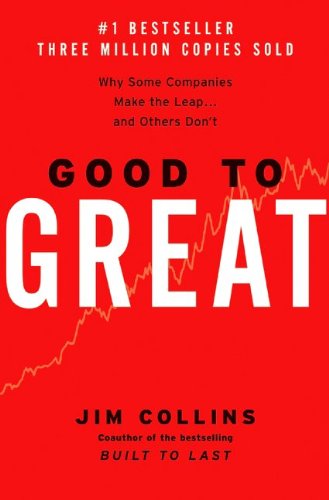
From "Good to Great: Why Some Companies Make the Leap... and Others Don't"
🎧 Listen to Summary
Free 10-min PreviewThe Hedgehog vs. The Fox: A Foundation for Strategic Clarity
Key Insight
Based on an ancient Greek parable, Isaiah Berlin categorized the world into hedgehogs and foxes. The fox, a cunning creature, devises numerous complex strategies for sneak attacks, constantly circling the hedgehog's den. It appears fast, sleek, and crafty, seemingly the assured winner. In contrast, the dowdier hedgehog simply waddles along, and when threatened, rolls into a perfect sphere of sharp spikes. Despite the fox's superior cunning and varied approaches, the hedgehog consistently wins by employing its single, simple, yet impenetrable defense.
Berlin extrapolated this parable to human groups: foxes pursue many ends simultaneously, perceiving complexity, often scattered and diffused without integrating their thinking into a unifying vision. Hedgehogs, conversely, simplify the complex world into a single, overarching idea, principle, or concept that guides everything. Regardless of external complexity, a hedgehog reduces all challenges and dilemmas to simple, almost simplistic, core ideas, rendering anything unrelated to this central concept irrelevant.
The power of the hedgehog lies in its profound insight through simplicity. Exemplified by figures like Freud (the unconscious), Darwin (natural selection), Marx (class struggle), Einstein (relativity), and Adam Smith (division of labor), these individuals simplified complex worlds. Hedgehogs are not unintelligent; their piercing insight allows them to cut through complexity, discern underlying patterns, and focus on what is essential while ignoring the extraneous, thereby leaving a significant and lasting impact.
📚 Continue Your Learning Journey — No Payment Required
Access the complete Good to Great: Why Some Companies Make the Leap... and Others Don't summary with audio narration, key takeaways, and actionable insights from Jim Collins.