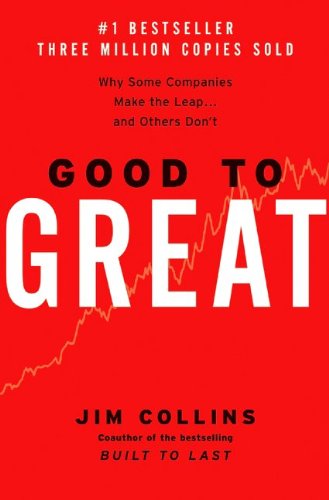
From "Good to Great: Why Some Companies Make the Leap... and Others Don't"
🎧 Listen to Summary
Free 10-min PreviewThe Doom Loop: A Pattern of Failed Transformations
Key Insight
In contrast to the flywheel effect, comparison companies often fall into a 'doom loop.' This pattern is characterized by a frantic search for a single 'miracle moment' or 'killer innovation' to bypass the arduous buildup phase and jump straight to breakthrough. They launch new programs with significant fanfare, often failing to produce sustained results, leading to a cycle of lurching back and forth. This constant redirection of effort, rather than consistent pushing in one direction, prevents the accumulation of momentum and leads to failure.
Warner-Lambert exemplifies the doom loop. From 1979 to the early 1990s, the company repeatedly shifted its core strategy between consumer products and healthcare, making abrupt U-turns. Each new CEO introduced a different program, halting the momentum of their predecessors. For example, a 1982 hospital supply acquisition was followed by a 550 million dollar write-off three years later. This instability led to three major restructurings and the cutting of 20,000 jobs, ultimately resulting in the company's acquisition by Pfizer due to its inability to build sustained momentum.
Two common patterns in the doom loop are the misguided use of acquisitions and leaders who undo previous work. Comparison companies often make large acquisitions to achieve quick growth or diversify away problems without addressing fundamental strengths, believing 'you can buy your way to growth, but you absolutely cannot buy your way to greatness.' Similarly, leaders like Joseph Boyd at Harris Corporation, after a period of positive momentum, divested the highly profitable printing business (number one globally, nearly one-third of operating profits) to enter the office automation market where the company had no core competence, causing its stock to fall 39% behind the market by 1983 and over 70% by 1988, completely derailing its progress.
📚 Continue Your Learning Journey — No Payment Required
Access the complete Good to Great: Why Some Companies Make the Leap... and Others Don't summary with audio narration, key takeaways, and actionable insights from Jim Collins.