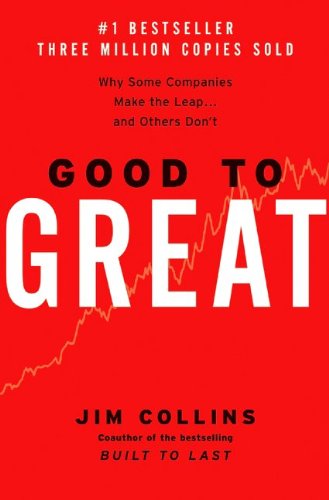
From "Good to Great: Why Some Companies Make the Leap... and Others Don't"
🎧 Listen to Summary
Free 10-min PreviewManaging Short-Term Pressures and Cultivating Internal Alignment
Key Insight
Adopting the buildup-breakthrough flywheel model is not a luxury but a necessary approach, even under severe short-term constraints. Good-to-great companies implemented this model despite challenges like deregulation (Wells Fargo), looming bankruptcy (Nucor, Circuit City), potential takeover threats (Gillette, Kroger), or million-dollar-a-day losses (Fannie Mae). They effectively managed Wall Street pressures by focusing on accumulating tangible results, often by under-promising and over-delivering, which eventually garnered enthusiastic investor support.
Fannie Mae, for instance, initially saw its stock lag but then multiplied 64 times and outperformed the market by 35 times from 1984 to 2000 under its CEO, David Maxwell, by consistently delivering results. Abbott Laboratories employed 'Blue Plans,' publicly projecting a 15% earnings growth while internally targeting 25% or 30%. The difference in funds was channeled into a ranked list of unfunded entrepreneurial projects, effectively investing in the future while satisfying short-term market expectations, unlike its comparison company, Upjohn, which often failed to deliver promised future results.
For good-to-great companies, internal alignment was achieved not through grand motivational programs but by demonstrating tangible progress. Leaders like Kroger's Jim Herring avoided 'hoopla,' instead focusing on making incremental, successful steps. People are drawn to a winning team and contribute enthusiastically when they see visible results and feel the momentum building. Nucor, initially aiming to avoid bankruptcy in 1965, discovered its steel-making prowess through consistent effort, eventually realizing in 1975 it could become the number one steel company, a goal achieved over two decades later through persistent 'flywheel' pushes.
📚 Continue Your Learning Journey — No Payment Required
Access the complete Good to Great: Why Some Companies Make the Leap... and Others Don't summary with audio narration, key takeaways, and actionable insights from Jim Collins.