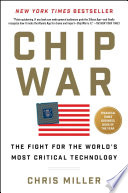
From "Chip War"
🎧 Listen to Summary
Free 10-min PreviewChina's 'Made in China 2025' Strategy for Semiconductor Self-Sufficiency
Key Insight
China's leadership recognized that overcoming its semiconductor dependence was crucial, not merely to mitigate supply chain vulnerabilities, but also to ascend the economic value chain. The ambition was to produce 'core technologies' that the world would covet, escaping the low-profit model exemplified by iPhone assembly where Chinese labor contributes significantly but Apple and chipmakers capture most of the value. This strategic pivot required a comprehensive plan to develop an indigenous, leading-edge chip industry, mirroring the successful approaches of countries like Japan, Taiwan, and South Korea, which involved massive capital injection, attracting overseas talent, mandatory technology transfer from foreign partners, and leveraging international competition.
Xi Jinping explicitly called for an organized 'assault' on core technology research, particularly in semiconductors, emphasizing the need for 'gaining breakthroughs...as quickly as possible.' This vision fueled the 'Made in China 2025' plan, which set an ambitious target to reduce China’s reliance on imported chips from 85% in 2015 to 30% by 2025. This aggressive strategy aims not for integration into the existing global semiconductor ecosystem, but rather for its fundamental transformation, driven by security concerns over efficiency.
The challenge is immense, given China’s current capabilities. Its market share is less than 1% in chip design software, 2% in core intellectual property, 4% in silicon wafers, 1% in fabrication tools, 5% in chip designs, and 7% in chip fabrication, none of which are leading-edge. Overall, Chinese firms hold only a 6% global market share across the entire semiconductor supply chain, compared to the U.S.'s 39%. For advanced logic, memory, and analog chips, China remains critically dependent on American software and designs, American, Dutch, and Japanese machinery, and South Korean and Taiwanese manufacturing, highlighting the urgency behind Beijing's self-sufficiency drive.
📚 Continue Your Learning Journey — No Payment Required
Access the complete Chip War summary with audio narration, key takeaways, and actionable insights from Chris Miller.