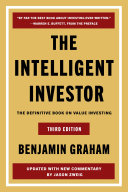
From "The Intelligent Investor Third Edition"
🎧 Listen to Summary
Free 10-min PreviewShareholder Oversight, Capital Allocation, and Executive Compensation
Key Insight
For decades, there has been an argument for shareholders to adopt a more intelligent and energetic approach towards management. This includes demanding clear explanations for poor results, supporting initiatives to improve or remove unproductive management, and being critical when results are unsatisfactory, poorer than peers, or lead to a long-term unsatisfactory market price. However, direct action by the general body of shareholders has proven largely ineffective. Instead, take-overs, driven by companies seeking diversification or enterprising groups, have become the primary mechanism for management change. These take-overs capitalize on low market prices caused by poor management, often 'bailing out' passive public shareholders by offering a price reflecting the enterprise's value under competent management. This external pressure has notably increased boards' diligence in ensuring effective top management, leading to more frequent leadership changes.
The core of the tension between managers and owners frequently centers on capital allocation. Managers often seek to retain maximum capital, which can result in excessive spending on acquisitions, hoarding funds beyond necessity, or inflated self-compensation. Historically, high dividend payouts, often between 6% and 10%, served as a vital check on management's power by transferring cash directly to shareholders. Share buybacks emerged for a similar purpose: to return surplus cash, preventing its misapplication by management, as exemplified by Exxon's ill-fated venture into typewriters or Mobil Oil's acquisition of Montgomery Ward. A CEO's paramount responsibility is to allocate capital productively for essential business needs, such as capital expenditures, research and development, or staffing. Once these needs are met, any excess capital should be returned to owners, either through dividends or buybacks, as both methods fundamentally reduce company capital, increase owner capital, and shift uncertain future returns to present certainty.
While share buybacks in the U.S. totaled $6.8 trillion from 2014 to 2023, they are merely a tool, neither inherently good nor evil. Their efficacy depends entirely on the specific circumstances. Companies frequently misjudge their stock's value, engaging in destructive buybacks when shares are overpriced, as evidenced by Lehman Brothers' $4 billion buybacks before its collapse or Citigroup's $20 billion in repurchases before requiring a $45 billion government bailout. Conversely, without buybacks, managers might waste even more capital on ill-conceived whims. Research suggests no definitive link between buybacks and significant CEO pay raises or stock price increases, and capital expenditures and R&D have, in fact, reached record highs despite increased share repurchases. For executive compensation, intelligent investors must scrutinize high pay coupled with unimpressive performance, such as a CEO receiving over $750 million while the company's stock dramatically underperforms. Compensation structures often rely on easily manipulated metrics like 'Adjusted OIBDA.' Shareholders should actively vote against unfair compensation plans and the re-election of approving directors, fulfilling their duty as 'intelligent owners.' Performance-based pay should be tied to simple, transparent, and difficult-to-manipulate metrics, like sales growth, pre-tax income, per-share book value growth, and long-term stock returns, benchmarked against industry peers.
📚 Continue Your Learning Journey — No Payment Required
Access the complete The Intelligent Investor Third Edition summary with audio narration, key takeaways, and actionable insights from Benjamin Graham, Jason Zweig.